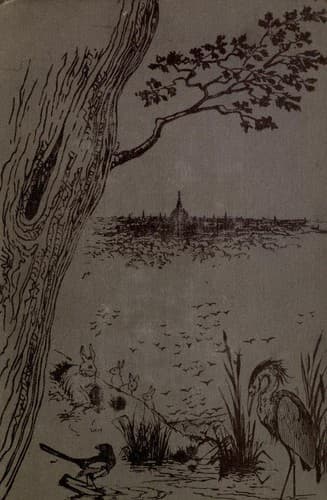
Country life -- England; Natural history -- Outdoor books; Nature study
A vessel comes round the promontory; it is not a trireme of old Rome,
nor the "fair and stately galley" Count Arnaldus hailed with its seamen
singing the mystery of the sea. It is but a brig in ballast, high out of
the water, black of hull and dingy of sail: still it is a ship, and
there is always an interest about a ship. She is so near, running along
but just outside the reef, that the deck is visible. Up rises her stern
as the billows come fast and roll under; then her bow lifts, and
immediately she rolls, and, loosely swaying with the sea, drives along.
The slope of the billow now behind her is white with the bubbles of her
passage, rising, too, from her rudder. Steering athwart with a widening
angle from the land, she is laid to clear the distant point of
Dungeness. Next, a steamer glides forth, unseen till she passed the
cliff; and thus each vessel that comes from the westward has the charm
of the unexpected. Eastward there is many a sail working slowly into the
wind, and as they approach, talking in the language of flags with the
watch on the summit of the Head.
Once now and then the great _Orient_ pauses on her outward route to
Australia, slowing her engines: the immense length of her hull contains
every adjunct of modern life; science, skill, and civilisation are
there. She starts, and is lost sight of round the cliff, gone straight
away for the very ends of the world. The incident is forgotten, when one
morning, as you turn over the newspaper, there is the _Orient_ announced
to start again. It is like a tale of enchantment; it seems but yesterday
that the Head hid her from view; you have scarcely moved, attending to
the daily routine of life, and scarce recognise that time has passed at
all. In so few hours has the earth been encompassed.
The sea-gulls as they settle on the surface ride high out of the water,
like the mediaeval caravals, with their sterns almost as tall as the
masts. Their unconcerned flight, with crooked wings unbent, as if it
were no matter to them whether they flew or floated, in its peculiar
jerking motion somewhat reminds one of the lapwing--the heron has it,
too, a little--as if aquatic or water-side birds had a common and
distinct action of the wing.
Sometimes a porpoise comes along, but just beyond the reef; looking down
on him from the verge of the cliff, his course can be watched. His dark
body, wet and oily, appears on the surface for two seconds; and then,
throwing up his tail like the fluke of an anchor, down he goes. Now look
forward, along the waves, some fifty yards or so, and he will come up,
the sunshine gleaming on the water as it runs off his back, to again
dive, and reappear after a similar interval. Even when the eye can no
longer distinguish the form, the spot where he rises is visible, from
the slight change in the surface.
Public-domain text, read in full here on John Shaqi.
Reviews
Reviews
No reviews yet
Be the first to share your thoughts on this work.
Elsewhere in the archive
Join the Discussion
Join the discussion
Sign in to leave a comment or review.
Sign InorCreate an account