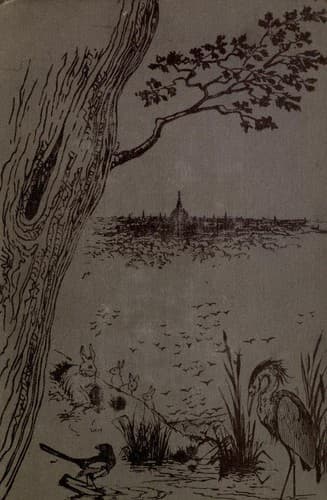
Country life -- England; Natural history -- Outdoor books; Nature study
The happy greenfinch--I use the term of forethought, for the greenfinch
seems one of the very happiest of birds in the hedges--accustomed during
all its brief existence to wander in company with friends from bush to
bush, and tree to tree, must literally pine its heart out. Or it may be
streaked with bright paint and passed on some unwary person for a Java
sparrow or a "blood-heart."
The little boy who dares to take a bird's nest is occasionally fined and
severely reproved. The ruffian-like crew who go forth into the pastures
and lanes about London, snaring and netting full-grown birds by the
score, are permitted to ply their trade unchecked. I mean to say that
there is no comparison between the two things. An egg has not yet
advanced to consciousness or feeling: the old birds, if their nest is
taken, frequently build another. The lad has to hunt for the nest, to
climb for it or push through thorns, and may be pricked by brambles and
stung by nettles. In a degree there is something to him approaching to
sport in nesting.
But these birdcatchers simply stand by the ditch with their hands in
their pockets sucking a stale pipe. They would rather lounge there in
the bitterest north-east wind that ever blew than do a single hour's
honest work. Blackguard is written in their faces. The poacher needs
some courage, at least; he knows a penalty awaits detection. These
fellows have no idea of sport, no courage, and no skill, for their
tricks are simplicity itself, nor have they the pretence of utility, for
they do not catch birds for the good of the farmers or the market
gardeners, but merely that they may booze without working for the means.
Pity it is that any one can be found to purchase the product of their
brutality. No one would do so could they but realise the difference to
the captive upon which they are lavishing their mistaken love, between
the cage, the alternately hot and cold room (as the fire goes out at
night), the close atmosphere and fumes that lurk near the ceiling, and
the open air and freedom to which it was born.
The rooks only came to the dust-heap in hard weather, and ceased to
visit it so soon as the ground relaxed and the ploughs began to move.
But a couple of crows looked over the refuse once during the day for
months till men came to sift the cinders. These crows are permanent
residents. Their rendezvous is a copse, only separate from the furze by
the highway.
Public-domain text, read in full here on John Shaqi.
Reviews
Reviews
No reviews yet
Be the first to share your thoughts on this work.
Elsewhere in the archive
Join the Discussion
Join the discussion
Sign in to leave a comment or review.
Sign InorCreate an account