Country life -- England; Natural history -- Outdoor books; Nature study
That was the cuckoos' season; next spring, they returned again, but much
later than usual, and did not call so much, nor were they seen so often
while they were there. One was calling in the copse on the evening of
the 6th of May as late as half-past eight, while the moon was shining.
But they were not so prominent; and as for the missel-thrushes, I did
not hear them at all in the copse. It was the wood-pigeons' year. Thus
the birds come in succession and reign by turns.
Even the starlings vary, regular as they are by habit. This season
(1881) none have whistled on the house-top. In previous years they have
always come, and only the preceding spring a pair filled the gutter with
the materials of their nest. Long after they had finished a storm
descended, and the rain, thus dammed up and unable to escape, flooded
the corner. It cost half a sovereign to repair the damage, but it did
not matter; the starlings had been happy. It has been a disappointment
this year not to listen to their eager whistling and the flutter of
their wings as they vibrate them rapidly while hovering a moment before
entering their cavern. A pair of house-martins, too, built under the
eaves close to the starlings' nest, and they also disappointed me by not
returning this season, though the nest was not touched. Some fate, I
fear, overtook both starlings and house-martins.
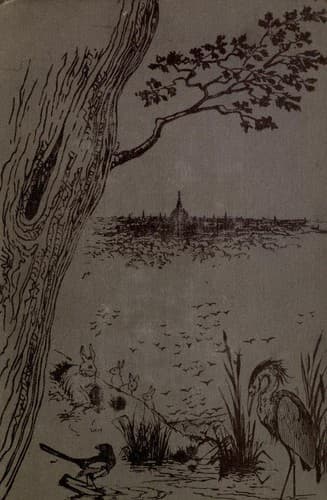
Another time it was the season of the lapwings. Towards the end of
November (1881), there appeared a large flock of peewits, or green
plovers, which flock passed most of the day in a broad, level ploughed
field of great extent. At this time I estimated their number as about
four hundred; far exceeding any flock I had previously seen in the
neighbourhood. Fresh parties joined the main body continually, until by
December there could not have been less than a thousand. Still more and
more arrived, and by the first of January (1882) even this number was
doubled, and there were certainly fully two thousand there. It is the
habit of green plovers to all move at once, to rise from the ground
simultaneously, to turn in the air, or to descend--and all so regular
that their very wings seem to flap together. The effect of such a vast
body of white-breasted birds uprising as one from the dark ploughed
earth was very remarkable.
When they passed overhead the air sang like the midsummer hum with the
shrill noise of beating wings. When they wheeled a light shot down
reflected from their white breasts, so that people involuntarily looked
up to see what it could be. The sun shone on them, so that at a distance
the flock resembled a cloud brilliantly illuminated. In an instant they
turned and the cloud was darkened. Such a great flock had not been seen
in that district in the memory of man.
Public-domain text, read in full here on John Shaqi.
Reviews
Reviews
No reviews yet
Be the first to share your thoughts on this work.
Elsewhere in the archive
Join the Discussion
Join the discussion
Sign in to leave a comment or review.
Sign InorCreate an account