Country life -- England; Natural history -- Outdoor books; Nature study
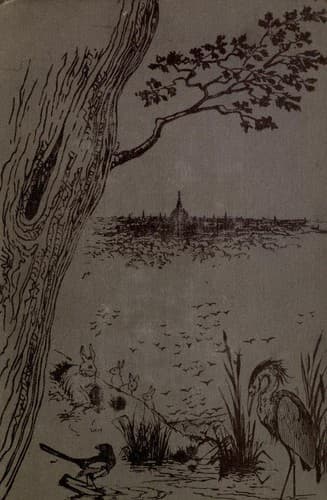
It is curious to note the number of creatures to whom the oak furnishes
food. The jays, for instance, are now visiting them for acorns; in the
summer they fluttered round the then green branches for the chafers, and
in the evenings the fern owls or goat-suckers wheeled about the verge
for these and for moths. Rooks come to the oaks in crowds for the
acorns; wood-pigeons are even more fond of them, and from their crops
quite a handful may sometimes be taken when shot in the trees.
They will carry off at once as many acorns as old-fashioned economical
farmers used to walk about with in their pockets, "chucking" them one,
two, or three at a time to the pigs in the stye as a _bonne bouche_ and
an encouragement to fatten well. Never was there such a bird to eat as
the wood-pigeon. Pheasants roam out from the preserves after the same
fruit, and no arts can retain them at acorn time. Swine are let run out
about the hedgerows to help themselves. Mice pick up the acorns that
fall, and hide them for winter use, and squirrels select the best.
If there is a decaying bough, or, more particularly, one that has been
sawn off, it slowly decays into a hollow, and will remain in that state
for years, the resort of endless woodlice, snapped up by insect-eating
birds. Down from the branches in spring there descend long, slender
threads, like gossamer, with a caterpillar at the end of each--the
insect-eating birds decimate these. So that in various ways the oaks
give more food to the birds than any other tree. Where there are oaks
there are sure to be plenty of birds. Beeches come next. Is it possible
that the severe frosts we sometimes have split oak trees? Some may be
found split up the trunk, and yet not apparently otherwise injured, as
they probably would be if it had been done by lightning. Trees are said
to burst in America under frost, so that it is not impossible in this
country.
There is a young oak beside the highway which in autumn was wreathed as
artistically as could have been done by hand. A black bryony plant grew
up round it, rising in a spiral. The heart-shaped leaves have dropped
from the bine, leaving thick bunches of red and green berries clustering
about the greyish stem of the oak.
Every one must have noticed that some trees have a much finer autumn
tint than others. This, it will often be found, is an annual occurrence,
and the same elm, or beech, or oak that has delighted the eye with its
hues this autumn, will do the same next year, and excel its neighbours
in colour. Oaks and beeches, perhaps, are the best examples of this, as
they are also the trees that present the most beautiful appearance in
autumn.
Public-domain text, read in full here on John Shaqi.
Reviews
Reviews
No reviews yet
Be the first to share your thoughts on this work.
Elsewhere in the archive
Join the Discussion
Join the discussion
Sign in to leave a comment or review.
Sign InorCreate an account