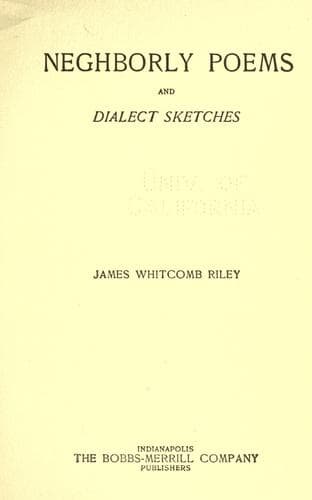
Neghborly Poems and Dialect SketchesRiley, James Whitcomb
General
Neghborly Poems and Dialect Sketches
Riley, James Whitcomb
Dialect literature, American; Dialect poetry, American
Many more, indeed, than may be mentioned now there are of these real
benefactors and preservers of the wayside characters, times, and
customs of our ever-shifting history. Needless is it to speak here of
the earlier of our workers in the dialectic line--of James Russell
Lowell's New England "Hosea Biglow," Dr. Eggleston's "Hoosier
School-Master," or the very rare and quaint, bright prattle of "Helen's
Babies." In connection with this last let us very seriously inquire
what this _real_ child has done that Literature should so persistently
refuse to give him an abiding welcome? Since for ages this question
seems to have been left unasked, it may be timely now to propound it.
Why not the real child in Literature? The real child is good enough (we
all know he is bad enough) to command our admiring attention and most
lively interest in real life, and just as we find him "in the raw."
Then why do we deny him any righteous place of recognition in our
Literature? From the immemorial advent of our dear old Mother Goose,
Literature has been especially catering to the juvenile needs and
desires, and yet steadfastly overlooking, all the time, the very
principles upon which Nature herself founds and presents this lawless
little brood of hers--the children. It is not the children who are out
of order; it is Literature. And not only is Literature out of order,
but she is presumptuous; she is impudent. She takes Nature's children
and revises and corrects them till "their own mother doesn't know
them." This is literal fact. So, very many of us are coming to inquire,
as we've a right, why is the real child excluded from a just hearing in
the world of letters as he has in the world of fact? For instance, what
has the lovely little ragamuffin ever done of sufficient guilt to
eternally consign him to the monstrous penalty of speaking most
accurate grammar all the literary hours of the days of the years of his
otherwise natural life?--
"Oh, mother, may I go to school
With brother Charles to-day?
The air is very fine and cool;
Oh, mother, say I may!"
--Is this a real boy that would make such a request, and is it the real
language he would use? No, we are glad to say that it is not. Simply it
is a libel, in every particular, on any boy, however fondly and
exactingly trained by parents however zealous for his overdecorous
future. Better, indeed, the dubious sentiment of the most trivial
nursery jingle, since the latter at least maintains the lawless though
wholesome spirit of the child-genuine.--
"Hink! Minx! The old witch winks--
The fat begins to fry;
There's nobody home but Jumping Joan,
Father and mother and I."
Though even here the impious poet leaves the scar of grammatical
knowledge upon childhood's native diction; and so the helpless little
fellow is again misrepresented, and his character, to all intents and
purposes, is assaulted and maligned outrageously thereby.
Public-domain text, read in full here on John Shaqi.
Reviews
Reviews
No reviews yet
Be the first to share your thoughts on this work.
Elsewhere in the archive
Join the Discussion
Join the discussion
Sign in to leave a comment or review.
Sign InorCreate an account