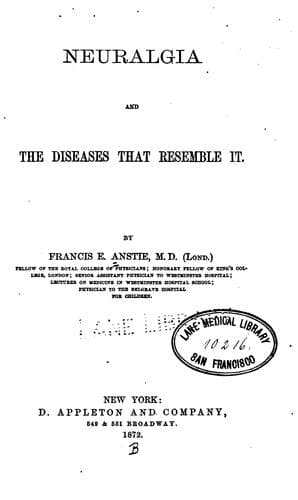
Neuralgia and the diseases that resemble itAnstie, Francis Edmund
Science
Neuralgia and the diseases that resemble it
Anstie, Francis Edmund
Neuralgia
The most common variety of peri-uterine neuralgia is that which attends
certain kinds of difficult menstruation. It would be hardly correct to
give the name of neuralgia to the pain existing in these very numerous
cases of dysmenorrhoea in which the suffering is apparently altogether
dependent on the mere retention or difficult escape of the menstrual
fluid, although the character of the pain often resembles the neuralgic
type. There is another group of dysmenorrhoeal affections however, in
which the pain may fairly be called neuralgic, since it is apparently
independent of the circumstances of the discharge of menstrual fluid,
and simply attends the process, seemingly on account of a
naturally-exaggerated irritability of the organs concerned. There is a
large class of young women in whom, and more especially before marriage,
the time of menstruation is always marked by the occurrence of more or
less severe pain. Formerly I used to believe that this pain was relieved
on the occurrence of the discharge, but I have seen too many cases of a
contrary nature to retain this opinion. I now believe that the subjects
of the kind of menstrual pain to which I am referring are naturally
endowed with a very irritable nervous apparatus of the pelvic organs,
and that there is a certain character at once of immaturity and
excitability in their sexual organs, especially in the virgin condition.
So far from these females being disposed to sterility, as is too often
the case with those dysmenorrhoeal subjects whose troubles depend upon
occlusion, distortion, or narrowing of the outlets, they are often
extremely apt to the generative function; and, what is more, the full
and natural exercise of the sexual function appears necessary to the
health of their organs, as is shown by the fact that these menstrual
pains lose their abnormal character, completely or in great part, after
marriage, and especially after child-bearing. The contrast between the
two types of dysmenorrhoeal patients is sharply brought out by the two
following cases:
CASE I.--S. M., a housemaid, aged twenty-three when first under my
notice, was the picture of physical health and strength, very
intelligent, and a girl of excellent character and most industrious
habits. At every menstrual period, however, she suffered, for some hours
previously to the occurrence of the flow, from severe pain in the
uterine region, which was tumefied and tender. Hot hip-baths gave some
relief, apparently by hastening the discharge; as soon as the latter was
established, the pain rapidly subsided. This young woman married a
healthy and vigorous young man, but has never had any children, and at
the date of my last inquiries still suffered periodically from her old
troubles.
Public-domain text, read in full here on John Shaqi.
Reviews
Reviews
No reviews yet
Be the first to share your thoughts on this work.
Elsewhere in the archive
Join the Discussion
Join the discussion
Sign in to leave a comment or review.
Sign InorCreate an account