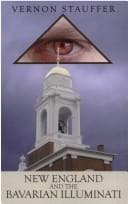
New England and the Bavarian IlluminatiStauffer, Vernon
History
New England and the Bavarian Illuminati
Stauffer, Vernon
Illuminati; New England -- Church history; Thesis (Ph. D.)
Upon the receipt of a copy of Morse’s thanksgiving sermon, Cobbett
communicated to his readers the joy he experienced in being able to put
them in possession of extracts from it.[756] Morse’s sermon, in his
judgment, was an extraordinary performance. Of its Appendix he wrote:
“This Appendix is one of the most valuable political tracts that ever
appeared in America, whether we view it as a collection of facts, or
as an address to the reason and feelings of the people.”[757] Of the
sermon as a whole he wrote:
It has gone through two editions, and a third is about to be
commenced. Doctor Morse has long been regarded as a benefactor
to his country; but notwithstanding his former labours have been
of great utility, this last work, I have no hesitation to say,
surpasses them all in this respect; and it must, if there be any
such thing as _national gratitude_ in America, render the author
the object of universal esteem. He has brought to light facts which
people in general never before dreamed of, and however deaf the
middle and southern states may be to his warning voice, New-England
will listen to it.[758]
This was very strong language, providing the personality of William
Cobbett is left out of account! How soothingly it fell upon the ears
of a certain clergyman in New England, which ears, it may be remarked,
were growing accustomed to much less kindly comment, we may leave to
conjecture.
As for Benjamin Franklin Bache, the editor of the _Aurora_[759] and
as militant an advocate of Democratic principles as this country
contained, all such views of the case were so much puerile _fol de
rol_. Robison’s _Proofs_ was a blending of “a most absurd collection
of stories respecting the mystical societies in Germany with some
fragments of histories of French Free Masonry, ... [an] inconsistent
Farrago.”[760] Weak indeed must be the cause of despotism “when its
Satellites can imagine a dissemination of such contemptible mummery
would calumniate the friends of Liberty or paralize their efforts to
explore the _divinity of kings_, or the _dogma of priests_.”[761] The
explanation of Morse’s faith in Robison’s book is to be sought in the
fact that the minister of Charlestown received his doctor’s degree from
the University of Glasgow; and therefore on the principle, “Tickle me
and I’ll scratch you,” the Glasgow professor’s production was entitled
to credit.[762]
FOOTNOTES:
[695] _Massachusetts Mercury_, Nov. 3, 1798: article by “A Customer.”
[696] _Massachusetts Mercury_, Nov. 13, 1798.
[697] _Ibid._
[698] _Ibid._, Nov. 16, 1798. Extracts from Barruel’s _Memoirs_,
garnered from English reviews, were offered in evidence by this writer.
The charge of _contradiction_ was hotly commanded by him to give place
to the darker charge of _designed perversion_ on the part of Robison’s
enemies.
[699] _Ibid._, Nov. 30, 1798.
[700] _Massachusetts Mercury_, Nov. 30, 1798.
[701] _Massachusetts Mercury_, Oct. 26, 1798.
[702] _Ibid._
Public-domain text, read in full here on John Shaqi.
Reviews
Reviews
No reviews yet
Be the first to share your thoughts on this work.
Elsewhere in the archive
Join the Discussion
Join the discussion
Sign in to leave a comment or review.
Sign InorCreate an account