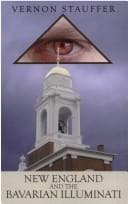
New England and the Bavarian IlluminatiStauffer, Vernon
History
New England and the Bavarian Illuminati
Stauffer, Vernon
Illuminati; New England -- Church history; Thesis (Ph. D.)
To trace in detail the increasingly bitter party strife in New England
would not only call for the canvassing of material already well
known, but would lead us far afield from the special object of this
investigation. Only the main features of the case need to be noted.
The temporary check the Democrats suffered on account of the
suppression of the secret political clubs was soon removed by the wave
of anti-British sentiment that swept the country upon the publication
of the treaty which John Jay negotiated between Great Britain and the
United States, late in the autumn of 1794.[254]
The truth is, nothing less than a howl of rage went up from the throats
of the people of the United States, and the voices of the men of New
England were by no means lost in the chorus.[255] Nothing that could
have been said to inflame the blind and passionate anger of the people
was omitted. The United States, it was asserted, had been resolved back
into the colonies of Great Britain.[256] The Senate had bargained away
the blood-bought privileges of the people for less than the proverbial
mess of pottage. It had signed the death-warrant of the country’s
trade and entailed beggary on its inhabitants and their posterity
forever.[257] The people’s cause had been most perfidiously betrayed.
The trading class, whose pecuniary interests would be jeopardized if
England were to be left free to prey upon our commerce, especially if
the way should remain open for the two countries to drift into actual
war, might show itself disposed to make a choice of the lesser of two
evils and accept the treaty; but the great mass of the people were
indignantly hostile, it must be added, to the point of unreason.[258]
The promulgation of the treaty by Washington, February 29, 1796, as
the law of the land, had the effect of bringing to a close a period of
agitation which deeply affected the national life.[259] For one thing,
the violence of party spirit had been so augmented that henceforth
there were to be no limits to which men would not go in the expression
of their antipathies and prejudices. Even the great Washington had
not been able to escape the venom of the tongue of the partisan in
the controversy which had raged over the treaty.[260] A condition of
the public mind which not only permitted but supported the burning in
effigy of its public servants; which consented to brutal campaigns of
newspaper calumniation, so unrestrained and indecent that the reader
looks back upon them with shame; to the circulation of incendiary
handbills and scurrilous pamphlets; to participation in lawless
gatherings in which riotous utterances of the most violent character
were freely made and disgraceful actions taken[261]—this could not
possibly make for a wholesome discipline of the passions of the
people.[262]
Public-domain text, read in full here on John Shaqi.
Reviews
Reviews
No reviews yet
Be the first to share your thoughts on this work.
Elsewhere in the archive
Join the Discussion
Join the discussion
Sign in to leave a comment or review.
Sign InorCreate an account