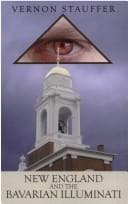
New England and the Bavarian IlluminatiStauffer, Vernon
History
New England and the Bavarian Illuminati
Stauffer, Vernon
Illuminati; New England -- Church history; Thesis (Ph. D.)
[267] As early as the winter of 1795 William Bentley made the disgusted
comment: “The Clergy are now the Tools of the Federalists.” _Diary_,
vol. ii, p. 129. Commencing with the participation of the clergy in the
discussion over the treaty, Democrat newspapers like the _Independent
Chronicle_ began to administer mild rebukes to the clergy for the
unwisdom of their conduct in favoring the British. _Cf._ the issue of
the _Chronicle_ for July 20, 1795, for one of the earliest utterances
of this sort. The spirit of resentment grew apace. Three years later
this spirit of moderation had been fully discarded, and the clergy
were being lashed unmercifully for their folly. For typical outbursts
of this character, _cf._ the _Independent Chronicle_ of Dec. 3, 1798.
Jedediah Morse paid tribute to the political concern and service of the
clergy in a letter to Wolcott, written Dec. 23, 1796: “Very few of ye
Clergy of my acquaintance seem disposed to pray for the success of the
French, since they have so insidiously and wickedly interferred in the
management of our political affairs, & I apprehend the complexion of
the thanksgiving sermons throughout N Engd. this year, are different
from those of the last, in respect to this particular. I can speak of
more than one with authority.” (_Wolcott Papers_, vol. viii, 20.)
[268] Morse, _The Federalist Party in Massachusetts_, p. 121.
[269] Pamphleteers and newspaper writers were much more explicit.
_The Pretensions of Thomas Jefferson to the Presidency Examined: and
the Charges against John Adams Refuted_, was one of the well known
political pamphlets of the day. According to Gibbs, in his _Memoirs
of the Administrations of Washington and John Adams_, vol. i, p. 379,
it was prepared by Oliver Wolcott and William Smith, the latter of
South Carolina. It marshalled the reasons why Jefferson should not
be elected to the presidency. Among these “reasons” the charge of
a close alliance between Jefferson and the men of the country who
were notoriously interested in the cause of irreligion was boldly
affirmed. _Cf._ page 36 _et seq._ This pamphlet was published in
1796. Later the charge of impiety was lodged against Jefferson with
great frequency. Typical utterances of this nature may be found in
the _Library of American Literature_, vol. iv, pp. 249–251: “The
Imported French Philosophy” (from “The Lay Preacher” of Joseph Dennie).
This disquisition was much quoted in the newspapers of the day. From
the position that the leaders of the Democrats were irreligious, it
was easy for the Federalists to glide over to the position that the
spirit of infidelity, believed to be spreading far and wide through
the country, was consciously and deliberately backed by the restless
and unscrupulous elements which, in the view of the Federalists,
formed the opposition. _The Connecticut Courant_ of January 19, 1795,
reflects this attitude. “The French”, it is asserted, “are mad in
Public-domain text, read in full here on John Shaqi.
Reviews
Reviews
No reviews yet
Be the first to share your thoughts on this work.
Elsewhere in the archive
Join the Discussion
Join the discussion
Sign in to leave a comment or review.
Sign InorCreate an account