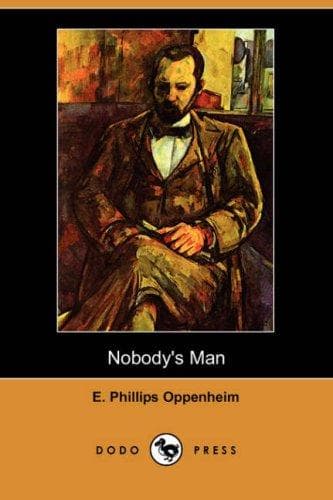
Nobody's ManOppenheim, E. Phillips (Edward Phillips)
General
Nobody's Man
Oppenheim, E. Phillips (Edward Phillips)
Detective and mystery stories
"You can't tell," Tallente replied. "You've given them something fresh
to think about. They may even decide not to vote to-day at all. Miller
has some strong supporters. He appeals tremendously to a certain class
of labour--and that class exists, you know, Dartrey--which loves the
excitement and the loafing of a strike, which feels somehow or other
that benefits got in any other way than by force are less than they
ought to have been."
There was a knock at the door. Northern put in his head. He was the
Boot and Shoe representative.
"Thought I'd let you know how the thing's gone," he said. "There's an
unholy row there. They've chucked Miller. Saunderson's in by five
votes. I'm off back again. Miller's up speaking, tearing mad."
He nodded and disappeared. Dartrey held out his hand.
"Thank God!" he exclaimed. "Let's clear cut, Tallente. Nora must know
about this at once. We'll call at the House and enter your amendment
against the vote of confidence. And then--Nora. I am not sure,
Tallente--the man's a subtle fellow--but I rather think we've driven
the final nail into Miller's coffin."
CHAPTER XXI
The great night came and passed with fewer thrills than any one had
imagined possible. Horlock himself undertook the defence of his once
more bitterly assailed Government and from the first it was obvious what
the end must be. He spoke with the resigned cynicism of one who knows
that words are fruitless, that the die is already cast and that his
little froth of words, valedictory in their tone from the first, was
only a tribute to exacting convention. Tallente had never been more
restrained, although his merciless logic reduced the issues upon which
the vote was to be taken to the plainest and clearest elements. He
remained studiously unemotional and nothing which he said indicated in
any way his personal interest in the sweeping away of the Horlock
regime. He was the impersonal but scathing critic, paving the way for
his chief. It was Dartrey himself who overshadowed every one that
night. He spoke so seldom in the House that many of the members had
forgotten that he was an orator of rare quality. That night he lifted
the debate from the level of ordinary politics to the idyllic realms
where alone the lasting good of the world is fashioned. He pointed out
what government might and should be, taking almost a Roman view of the
care of the citizen, his early and late education, his shouldering of
the responsibilities which belong to one of a great community. From the
individual he passed to the nation, sketching in a few nervous but
brilliant phrases the exact possibilities of socialistic legislation;
and he wound up with a parodied epigram: Government, he declared, was
philosophy teaching by failures. In the end, Miller led fourteen of his
once numerous followers into the Government lobby to find himself by
forty votes upon the losing side.
Public-domain text, read in full here on John Shaqi.
Reviews
Reviews
No reviews yet
Be the first to share your thoughts on this work.
Elsewhere in the archive
Join the Discussion
Join the discussion
Sign in to leave a comment or review.
Sign InorCreate an account