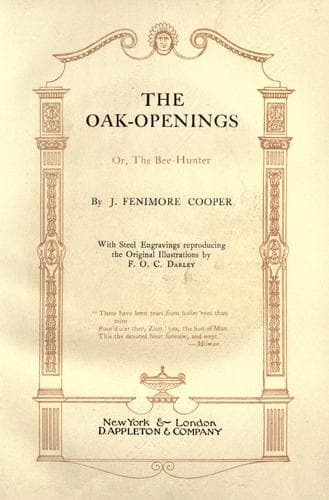
American fiction -- 19th century; Historical fiction; Indians of North America -- Fiction
As this smoking was just then more a matter of ceremony than for any
other purpose, a whiff or two suffices for each chief; the smoker
passing the pipe to his neighbor as soon as he had inhaled a few puffs.
The Indians are models of propriety, in their happiest moods, and every
one in that dark and menacing circle was permitted to have his turn
with the pipe, before any other step was taken. There were but two pipes
lighted, and mouths being numerous, some time was necessary in order
to complete this ceremony. Still, no sign of impatience was seen, the
lowest chief having as much respect paid to his feelings, as related
to his attention, as the highest. At length the pipes completed their
circuit, even Parson Amen getting, and using, his turn, when a dead
pause succeeded. The silence resembled that of a Quaker meeting, and
was broken only by the rising of one of the principal chiefs, evidently
about to speak. The language of the great Ojebway nation was used on
this occasion, most of the chiefs present belonging to some one of the
tribes of that stock, though several spoke other tongues, English and
French included. Of the three whites present, Parson Amen alone fully
comprehended all that was said, he having qualified himself in this
respect, to preach to the tribes of that people; though le Bourdon
understood nearly all, and even the corporal comprehended a good deal.
The name of the chief who first spoke at this secret meeting, which was
afterward known among the Ojebways by the name of the “Council of the
Bottom Land, near to the spring of gushing water,” was Bear's Meat, an
appellation that might denote a distinguished hunter, rather than an
orator of much renown.
“Brothers of the many tribes of the Ojebways,” commenced this personage,
“the Great Spirit has permitted us to meet in council. The Manitou of
our fathers is now among these oaks, listening to our words, and looking
in at our hearts. Wise Indians will be careful what they say in such a
presence, and careful of what they think. All should be said and thought
for the best. We are a scattered nation, and the time is come when we
must stop in our tracks, or travel beyond the sound of each other's
cries. If we travel beyond the hearing of our people, soon will our
children learn tongues that Ojebway ears cannot understand. The mother
talks to her child, and the child learns her words. But no child can
hear across a great lake. Once we lived near the rising sun. Where are
we now? Some of our young men say they have seen the sun go down in the
lakes of sweet water. There can be no hunting-grounds beyond THAT spot;
and if we would live, we must stand still in our tracks. How to do this,
we have met to consider.
Public-domain text, read in full here on John Shaqi.
Reviews
Reviews
No reviews yet
Be the first to share your thoughts on this work.
Elsewhere in the archive
Join the Discussion
Join the discussion
Sign in to leave a comment or review.
Sign InorCreate an account