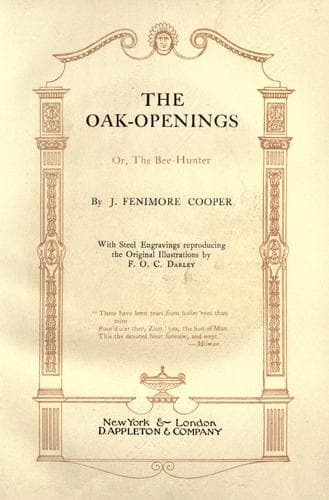
American fiction -- 19th century; Historical fiction; Indians of North America -- Fiction
Many were the “hughs” and other exclamations of admiration that
succeeded this display of desperate manhood! The body of The Weasel was
removed, and interred, while the wounded withdrew to attend to their
hurts; leaving the arena to the rest assembled there. As for the
corporal, he was pretty well blown, and, in addition to being now bound
hand and foot, his recent exertions, which were terrific while they
lasted, effectually incapacitated him from making any move, so long as
he was thus exhausted and confined.
A council was now held by the principal chiefs. Ungque had few friends.
In this, he shared the fate of most demagogues, who are commonly
despised even by those they lead and deceive. No one regretted him
much, and some were actually glad of his fate. But the dignity of the
conquerors must be vindicated. It would never do to allow a pale-face
to obtain so great an advantage, and not take a signal vengeance for
his deeds. After a long consultation, it was determined to subject the
captive to the trial by saplings, and thus see if he could bear the
torture without complaining.
As some of our readers may not understand what this fell mode of
tormenting is, it may be necessary to explain.
There is scarcely a method of inflicting pain, that comes within, the
compass of their means, that the North American Indians have not essayed
on their enemies. When the infernal ingenuity that is exercised on these
occasions fails of its effect, the captives themselves have been heard
to suggest other means of torturing that THEY have known practised
successfully by their own people. There is often a strange strife
between the tormentors and the tormented; the one to manifest skill in
inflicting pain, and the other to manifest fortitude in enduring it.
As has just been said, quite as much renown is often acquired by the
warrior, in setting all the devices of his conquerors at defiance, while
subject to their hellish attempts, as in deeds of arms. It might be more
true to say that such WAS the practice among the Indians, than to say,
at the present time, that such IS; for it is certain that civilization
in its approaches, while it has in many particulars even degraded the
red man, has had a silent effect in changing and mitigating many of his
fiercer customs--this, perhaps, among the rest. It is probable that the
more distant tribes still resort to all these ancient usages; but it is
both hoped and believed that those nearer to the whites do not.
Public-domain text, read in full here on John Shaqi.
Reviews
Reviews
No reviews yet
Be the first to share your thoughts on this work.
Elsewhere in the archive
Join the Discussion
Join the discussion
Sign in to leave a comment or review.
Sign InorCreate an account