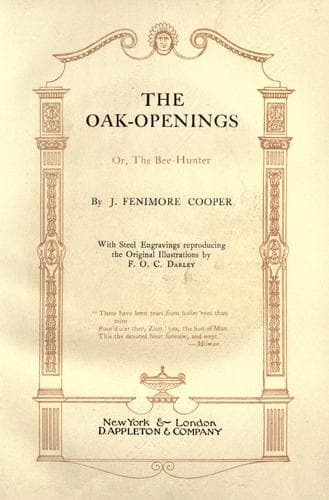
American fiction -- 19th century; Historical fiction; Indians of North America -- Fiction
As a vessel of war requires
a harbor, and usually a better harbor than a merchant-vessel, it strikes
us the “expounders” would do well to give this thought a moment's
attention. Behind it will be found the most unanswerable argument in
favor of the light-houses, too.
But, to return to the narrative: the Kalamazoo could be entered by
canoes, though it offered no very available shelter for a vessel of any
size. There was no other shelter for the savages for several miles to
the southward; and, should the wind increase, of which there were strong
indications, it was not only possible, but highly probable, that the
canoes would return. According to the account of the females, they
had passed only two hours before, and the breeze had been gradually
gathering strength ever since. It was not unlikely, indeed, that the
attention paid to the river by the warrior in the last canoe may have
had reference to this very state of the weather; and his haste to
overtake his companions been connected with a desire to induce them to
seek a shelter. All this presented itself to the beehunter's mind, at
once; and it was discussed between the members of the party, freely, and
not without some grave apprehensions.
There was one elevated point--elevated comparatively, if not in a very
positive sense--whence the eye could command a considerable distance
along the lake shore. Thither Margery now hastened to look after the
canoes. Boden accompanied her; and together they proceeded, side by
side, with a new-born but lively and increasing confidence, that was all
the greater, in consequence of their possessing a common secret.
“Brother must be much better than he was,” the girl observed, as they
hurried on, “for he has not once been into the shed to look at the
barrels! Before he went into the openings, he never entered the house
without drinking; and sometimes he would raise the cup to his mouth as
often as three times in the first half-hour. Now, he does not seem even
to think of it!”
“It may be well that he can find nothing to put into his cup, should he
fall into his old ways. One is never sure of a man of such habits, until
he is placed entirely out of harm's way.”
“Gershom is such a different being when he has not been drinking!”
rejoined the sister, in a touching manner. “We love him, and strive to
do all we can to keep him up, but it IS hard.”
“I am surprised that YOU should have come into this wilderness with any
one of bad habits.”
“Why not? He is my brother, and I have no parents--he is all to me: and
what would become of Dorothy if I were to quit her, too! She has lost
most of her friends, since Gershom fell into these ways, and it would
quite break her heart, did I desert her.”
“All this speaks well for you, pretty Margery, but it is not the less
surprising--ah, there is my canoe, in plain sight of all who enter the
river; THAT must be concealed, Injins or no Injins.”
Public-domain text, read in full here on John Shaqi.
Reviews
Reviews
No reviews yet
Be the first to share your thoughts on this work.
Join the Discussion
Join the discussion
Sign in to leave a comment or review.
Sign InorCreate an account