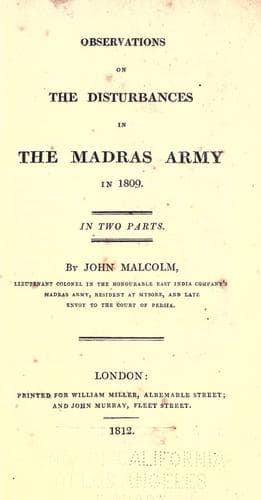
Observations on the Disturbances in the Madras Army in 1809Malcolm, John
History
Observations on the Disturbances in the Madras Army in 1809
Malcolm, John
India. Army -- History; Malcolm, John, 1769-1833
Apprehending mutiny among their soldiers, revolt among their subjects,
irruption from their Asiatic neighbours, or conquest by some European
state, no longer guarded by their own country, but the objects of her
just hostility, they would find themselves alone and unprotected in
the world. In this friendless situation they could be supported by no
generous enthusiasm, the child of patriotism and honour, which could
awaken no feeling in their bosom but shame and remorse. Their numbers
could only be kept up by adventurers, the refuse of the military
profession in Europe. The civil wars, inevitable in such a state of
things, would be not so much the consummation of their evils, as a
refuge from such intolerable calamities.
Happily for the British officers in India, (I speak not paradoxically,
but considerately,) no such calamity is probable. They are sure of
being haunted by so many "compunctious visitings of nature," from
the thoughts of their friends, of their Sovereign, of their beloved
country, as to impair that criminal energy necessary for the success of
desperate enterprizes. Theirs is not a country, or a state of manners,
or a system of religion and morality, which trains men to revolutionary
sternness and ferocity. Their failure was, and ever will be, certain.
But such convulsions bring dreadful consequences:--the loss of that
collective character which was the source of pride to each individual,
long regret and remorse, their hearts taught to dread generous and
social feeling; and the most distinguished of them, if not condemned to
death, still more unhappily abandoned to a dishonourable life.
In their native land they will meet little or none of that sympathy
which supports the sufferers for a general cause. Their discontent
appears to spring only from the most ignoble sources. Those who
have not visited India will not easily conceive that a pecuniary
retrenchment is chiefly felt (_which it really is_) as a degradation,
by an army already sufficiently excluded from the higher rewards of
valour: first shut out from military honours, and then from that
compensation for them which they had found in the prospect of returning
home to the exercise of generous virtue. Last, and worst of all, they
find that their more glaring and dangerous guilt has almost effaced the
remembrance of that misconduct which produced it, and given popularity
and character to those they deem their enemies.
Public-domain text, read in full here on John Shaqi.
Reviews
Reviews
No reviews yet
Be the first to share your thoughts on this work.
Join the Discussion
Join the discussion
Sign in to leave a comment or review.
Sign InorCreate an account