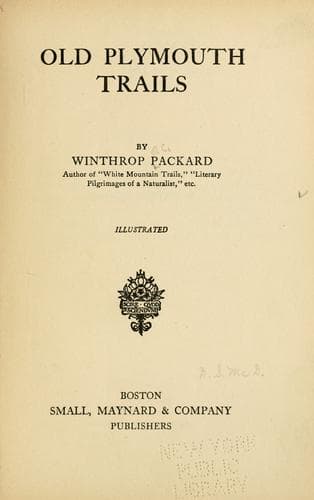
Natural history -- Massachusetts; Natural history -- Outdoor books; Plymouth County (Mass.)
And not all his catch are sure to be pickerel. Down below there in
the twilight of the warmest water next the bottom are perch and
dace, bass and eel, and all these are likely to hunger for shiner.
The largest eel I ever saw caught came up through the ice in this
way and I have even known the clumsy and stupid sucker to come out
of the hole on the hook, making the fisherman think for a moment
that he had hold of the one big pickerel of that particular pond.
I cannot conceive of a sucker actually attempting to eat a shiner,
even when impaled, impeded and wriggling, so such must have come
by the hook in some other way, probably accidentally caught as
they came by.
As for that monster fish, there are times, even when the fishermen
are not telling me about him, that I believe he exists. Besides
the two varieties of Esox mentioned there is another which is
common to all suitable waters of North America, Europe and Asia.
That is Esox Lucius, as Linnaeus named him, the common pike. This
fish is very like the pond pickerel in appearance and he sometimes
grows to weigh forty pounds or more and to a length of four feet.
Such a one might well be too large to come up through the hole
which the fishermen have cut for his little cousins, the brook
pickerel. It is quite possible that one of these Jonah-swallowing
leviathans rules the pickerel in each pond kingdom; like a Morgan
among millionaires. Of the pike, which he loved well, Isaac Walton
has much to say and I cannot refrain from quoting a few of his
most loving phrases, which are those which tell how he should be
cooked.
*****
Public-domain text, read in full here on John Shaqi.
Reviews
Reviews
No reviews yet
Be the first to share your thoughts on this work.
Elsewhere in the archive
Join the Discussion
Join the discussion
Sign in to leave a comment or review.
Sign InorCreate an account