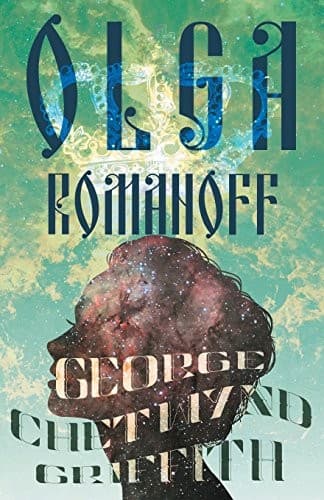
A FEW minutes before midnight on the fifteenth of May, in the year
2036, Khalid the Magnificent, lord and master of the greatest and most
splendid realm that had ever been ruled over by a single man since
the world began, stood alone on the spacious terrace of his palace
in Alexandria, gazing up at the myriads of stars that shone in the
cloudless firmament above him, and dreaming one of those dreams of
world-wide empire which had haunted the soul of such men as he from the
days of Rameses the Great until his own.
He was a man of thirty-four, tall, swarthy, and athletic, with the
proud aquiline features of the Arab, the dark, alternately flashing and
melting eyes of the Circassian, and the strong, reposeful dignity of
the Turk--a man whom women looked upon with love and men with respect
that was often akin to dread.
The lord of seven hundred million subjects who, even in those days, so
strong was still the faith and loyalty of the Moslem, looked upon him
only as something less than Allah and the Prophet whose sacred blood
flowed in his veins, his soaring ambition was not content even with the
splendid inheritance that he had received from his ancestors.
In his being were closely blended those elements of religious
enthusiasm and worldly ambition which had made the men of the Golden
Age of Islam such irresistible conquerors and such mighty rulers of
men. He had pondered over the past history of his faith and his people
from the times of the Prophet down to his own, until he had come to
believe himself the man chosen by Destiny to subjugate the world, and
to compel all men, from pole to pole, and east to west, to accept
the rule and faith of Islam, and to confess the unity of God and the
apostleship of Mohammed.
He saw in the vast area of the Anglo-Saxon Federation, which now, in
name at least, dominated Europe, America, and Australasia, only a
collection of democratic and ill-governed States in which the mob ruled
by blind counting of heads, and in which religion had been refined into
a mere philosophy of life and morals, the last word of which seemed to
him to be: Make the best of to-day, lest to-morrow should never come.
In his own breast the flame of the fierce, uncompromising faith of
Islam burnt, undimmed by the mists of the centuries that had passed
since the first Moslem armies had emerged from the deserts of Arabia to
conquer the greater part of the Roman world.
Why should he not send forth his armies, as the Khalifs of old had
done, to plant the banner of the Crescent over the subjugated realms of
Christendom, and rule, the greatest of the Commanders of the Faithful,
sovereign lord of a Moslem world?
It was a splendid destiny, but there was a power in the world, located
in one tiny spot of earth, and yet, so far as he knew, universal
and irresistible, before which the armies which he had called into
existence would be as helpless as a swarm of locusts before a forest
fire.
Public-domain text, read in full here on John Shaqi.
Reviews
Reviews
No reviews yet
Be the first to share your thoughts on this work.
Elsewhere in the archive
Join the Discussion
Join the discussion
Sign in to leave a comment or review.
Sign InorCreate an account