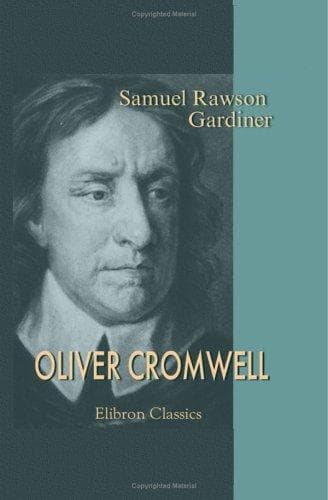
Cromwell, Oliver, 1599-1658; Great Britain -- History -- Commonwealth and Protectorate, 1649-1660
beyond imagination." There could be little doubt that even if the army
secured its retreat to its own country, its failure to defeat the Scots
would be followed by a general rising of the Cavaliers in England.
Humanly speaking, the prospect was a dark one, and Cromwell could but
console himself with his trust in divine assistance. "All," he wrote,
"shall work for good; our spirits are comfortable, praised be the
Lord, though our present condition be as it is, and indeed we have
much hope in the Lord, of Whose mercy we have had large experience."
With him faith in Divine protection was consistent with the adoption
of every military measure by which an adversary's mistakes could be
turned to his own advantage. It was otherwise with the clergy and their
adherents, who exercised so much influence on the Doon Hill. There had
been fresh purging of the Scottish army, and soldiers had again been
dismissed--not for any lack of military efficiency, but because their
views of the Covenant were insufficiently exalted. It is said that the
men who were thus weakening their own fighting power grew impatient
with Leslie for not crushing the enemy by an immediate onslaught. Other
causes may have combined to make the postponement of a conflict almost
impossible. There was no water on the Doon Hill, and provisions for
23,000 men must have been hard to come by in that bleak region. At all
events, on the 2nd the Scots began to move down the Hill. The struggle
was to be transformed from a competition in strategy to a competition
in tactics, and Cromwell, sure of mastery in that field, was rejoiced
at the sight which met his eyes. In the early morning of the 3rd a plan
of action brilliantly conceived was skilfully carried into execution;
and the Scots, after a brave resistance, broke and fled. As the sun
rose out of the sea, Cromwell, with the joyful exclamation on his lips:
"Let God arise, let His enemies be scattered," pushed his victorious
cavalry in pursuit. Before they drew rein, 3,000 of the enemy had been
slain, and 10,000 captured together with the whole of the artillery.
Never again did a Scottish army take the field to impose its religion
upon a recalcitrant England.
Public-domain text, read in full here on John Shaqi.
Reviews
Reviews
No reviews yet
Be the first to share your thoughts on this work.
Elsewhere in the archive
Join the Discussion
Join the discussion
Sign in to leave a comment or review.
Sign InorCreate an account