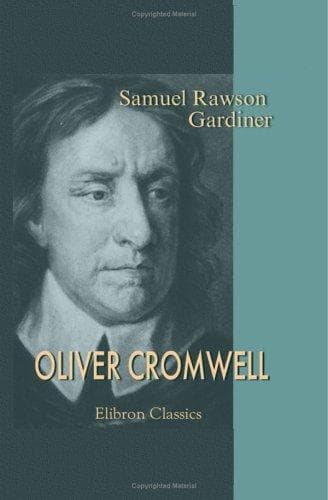
Cromwell, Oliver, 1599-1658; Great Britain -- History -- Commonwealth and Protectorate, 1649-1660
At last Cromwell was himself again. In the first days of June Charles's
new army lay at Stirling. The seizure and imprisonment of his English
partisans had deprived him of all hope of raising a diversion in the
south, and Leslie was compelled to fall back on the defensive tactics
by which he had guarded Edinburgh the year before. During the first
fortnight of July Cromwell laboured in vain to bring on an engagement.
Leslie, strongly posted amongst the hills to the south of Stirling, was
not to be induced to repeat the error he had committed at Dunbar, and
this time provisions and water could be obtained without difficulty.
If Cromwell did not intend to waste his army away, he must transfer it
to the enemy's rear, with a certain result of leaving the road open
for their advance into England. Six months before, whilst the chiefs
of English royalism were still at large, it would have been a most
hazardous plan. Now that they were under arrest, it might be attempted
with impunity. Lambert was sent across to North Queensferry, and on
July 20 he defeated, at Inverkeithing, a Scottish force sent out from
Stirling against him. Before long Cromwell followed his lieutenant,
and on August 2 Perth fell into his hands. The communications of
the Scottish army at Stirling were thus cut, and there was nothing
before it but to march southwards on the uncertain prospect of being
still able to find allies in England. That Cromwell had been able to
accomplish this feat was owing partly to his command of the sea, which
had enabled him with safety to send Lambert across the Forth, partly to
his knowledge that the materials of the Scottish army were far inferior
to those of his own. Had Leslie been at the head of a force capable
of meeting the invaders in the field, Cromwell at Perth might indeed
have found himself in an awkward position, as, in case of defeat, he
might easily have been driven back to perish in the Highlands. On the
other hand, it must be acknowledged that the English General had been
learning from his opponent. It was now--unless the campaign of Preston
be excepted, when his march upon Hamilton's flank had been decided by
the necessity of picking up his artillery in Yorkshire--that Cromwell,
for the first time in his life, developed strategical power, that is to
say, the power of combining movements, the result of which would place
the enemy in a false position. Already, before he followed Lambert, he
had summoned Harrison to Linlithgow, and had ordered him to keep the
Scots in check as they marched through England.
Public-domain text, read in full here on John Shaqi.
Reviews
Reviews
No reviews yet
Be the first to share your thoughts on this work.
Elsewhere in the archive
Join the Discussion
Join the discussion
Sign in to leave a comment or review.
Sign InorCreate an account