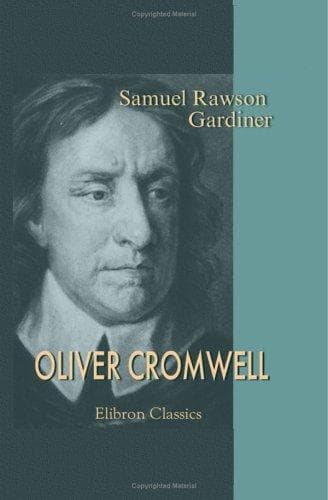
Cromwell, Oliver, 1599-1658; Great Britain -- History -- Commonwealth and Protectorate, 1649-1660
On December 16, 1653, Oliver was installed at Westminster as Lord
Protector under the conditions of the Instrument. His Council
consisted of seven officers and eight civilians, the most notable
of the latter being Sir Anthony Ashley Cooper--better known by the
title long afterwards conferred on him by Charles II. as the Earl of
Shaftesbury--who had been an active member of the Councils formed after
the break-up of the Long Parliament. Little as is known of his actions
during this period of his life, his rallying to the Protectorate
can only be explained as the result of the conviction that Oliver
was in earnest in his intention of giving to the new government a
preponderatingly civilian character, and of keeping it out of the hands
of fanatics on one hand, and of soldiers on the other. In Thurloe, who
had acted as Secretary to the Council since the spring of 1652, the
Protector acquired an official whose ability was beyond dispute, who
was appalled by no labours, and one who, with the aid of the network of
spies whose poverty he utilised, was keen-sighted in penetrating the
secrets of conspirators at home and abroad.
The Protectorate was at least placed beyond immediate danger by the
adhesion of the army and the fleet. Scarcely less important was the
concurrence of the judges, amongst them that honourable man and eminent
lawyer Matthew Hale, who had won Oliver's approbation by his services
in the cause of law-reform. Hale, indeed, informed the Protector that
as he was personally desirous of seeing a Royalist restoration, he
could only remain on the bench on the condition that he should be
excused from taking part in the trials of political prisoners. Oliver
at once gave the required promise. The compromise was creditable to
both the parties concerned.
Public-domain text, read in full here on John Shaqi.
Reviews
Reviews
No reviews yet
Be the first to share your thoughts on this work.
Elsewhere in the archive
Join the Discussion
Join the discussion
Sign in to leave a comment or review.
Sign InorCreate an account