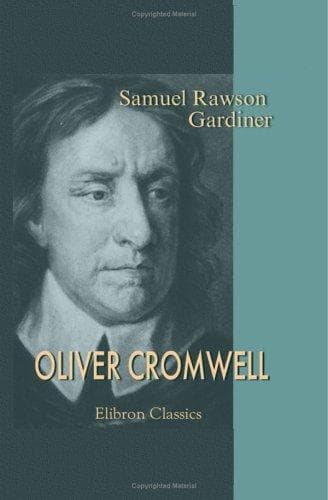
Cromwell, Oliver, 1599-1658; Great Britain -- History -- Commonwealth and Protectorate, 1649-1660
Oliver's task was necessarily conditioned by the nature of the
opposition he had to encounter. His new system, if it were to have
a chance of becoming permanent, would have to commend itself to
that large majority of men who follow no ideals, but are content to
live under any rule, whatever may have been its origin, if only the
rulers confer upon them a reasonable amount of protection, and are
sufficiently in sympathy with the governed to be regarded with love
rather than with fear. It was this quality that had mainly helped
Elizabeth to make a doubtful legal position a step in her triumphant
career, and it was to Elizabeth alone amongst recent English sovereigns
that Oliver looked with respect and admiration. Nor was he deficient
in many of the characteristics which had made Elizabeth great. He
had the same patriotism, the same skill in the selection of agents,
the same impatience of partisan bitterness in Church and State, the
same readiness to trust in the healing virtues of time. The chief
obstacles in the way of a repetition of Elizabeth's success lay, not
merely in the stain of the king's blood upon his hands, but also in his
leadership of an army of which the officers shaped their conduct in
accordance with distinct religious and political ideas. He had risen
to power by the sympathy of these men. Was it possible to secure the
sympathy of the nation without alienating the army to the support of
which he must look till he could place his authority on a wider basis?
In the first and easiest portion of the task before the Protector,
the redress of grievances weighing upon the people, there was no
hesitation. The Instrument had conferred upon Oliver and his Council
the right of issuing ordinances with the force of law up to the meeting
of Parliament; and in little more than eight months no fewer than
eighty-two of these ordinances had been issued subject to amendment,
if Parliament chose to interfere. The Council was, in fact, like the
Cabinet of to-day, far more capable of initiating legislation than a
Parliament consisting of several hundred members, and that so little
criticism attended these ordinances may be taken as satisfactory
evidence that there was good reason for that strengthening of the
government which had been the main argument of the founders of the new
constitution. The ordinance for the reform of Chancery was certainly
exposed to the conservative objections of the lawyers and was, no
doubt, susceptible of improvement, but it aimed at the removal of
acknowledged abuses, especially at accelerating the movements of a
Court whose long delays had caused that wide-spread irritation which
had given support even to the exaggerated proposals of the nominated
Parliament.
Public-domain text, read in full here on John Shaqi.
Reviews
Reviews
No reviews yet
Be the first to share your thoughts on this work.
Elsewhere in the archive
Join the Discussion
Join the discussion
Sign in to leave a comment or review.
Sign InorCreate an account