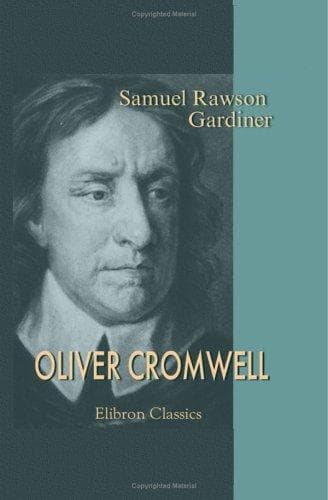
Cromwell, Oliver, 1599-1658; Great Britain -- History -- Commonwealth and Protectorate, 1649-1660
The imposition of such restriction was doubtless condemnable on the
principle that the will of the electorate expressed through its
representatives must be taken as final in all disputes. Neither
Cromwell, however, nor his opponents had recognised such a principle.
Vane and Bradshaw had been ready to exclude Royalists, and other
unfit persons, whilst the authors of the Instrument had imposed
qualifications with a very similar object. If a test there was to be,
the one now selected was not only the lightest possible, but it was
one that had already been signed by each constituency on behalf of
its members, without which formality they were not, according to the
Instrument, entitled to take their seats. It left them perfectly at
liberty to propose any amendment of the constitution, even to vote
against any one of Oliver's fundamentals with the exception of the
first.
It is impossible here to enter into details of the constitutional
debates which followed. It is sufficient to say that the basis which
Parliament proposed to substitute for the Instrument was the revival
of the negative voice, so that no constitutional innovation could be
made without the Protector's consent. Of the four fundamentals, the
first two--the one relating to the position of the single person and
the other refusing to Parliament the right of perpetuating itself--were
accepted without opposition. The other two raised greater difficulties.
The House was very far from being anxious to extend religious liberty
as widely as the Protector desired, but it ultimately agreed to a
form of words which practically left the decision in his hands. The
absolutely insurmountable difficulty was found in the disposal of
the army. In the first place, Parliament held out for the diminution
of the numbers of the regular forces to the 30,000 men allowed by
the Instrument, and required that if more were needed they should be
raised in the form of a militia which would fall more readily under
the influence of the local gentry. In the second place, the House
resolved to limit its grant of supply to the taxation required for the
maintenance of the army for a term of five years only, thus reserving
to itself the ultimate financial control which spells sovereignty.
Cromwell's whole soul recoiled from the acceptance of a scheme which
would render nugatory the proposed constitutional restrictions of
Parliamentary omnipotence, by enabling Parliament, at the end of the
assigned term, to stop the supplies without which the army could not
be maintained; unless indeed, when that term reached its end, the
Protector chose to employ his army to crush the Parliament of 1659
as he had employed it to crush the Parliament of 1653. Parliamentary
supremacy or military despotism were the alternatives which Oliver or
his successor would have to face in the not very distant future.
Public-domain text, read in full here on John Shaqi.
Reviews
Reviews
No reviews yet
Be the first to share your thoughts on this work.
Elsewhere in the archive
Join the Discussion
Join the discussion
Sign in to leave a comment or review.
Sign InorCreate an account