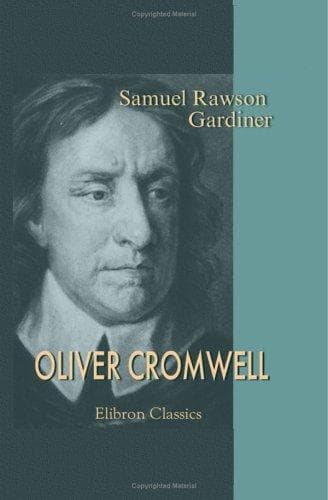
Cromwell, Oliver, 1599-1658; Great Britain -- History -- Commonwealth and Protectorate, 1649-1660
That the Royalists had religious ideals of their own was a provocation
which made it easy to deny them the toleration which they had hitherto
virtually enjoyed. The familiar cadences of the Book of Common Prayer
had become to them a symbol of political as well as of religious
faith, whilst the voice of the often long-winded, and sometimes
irrelevant ejaculator of prayers of his own conception, stood for them
as the embodiment of the forces which had conspired to murder their
king, to deprive them of the broad acres sold to satisfy the demands
of sequestrators, and to exclude them from all share in the public
interests of the country which they loved as devotedly as any Puritan
could possibly do. It was now that Oliver committed the mistake--which
thousands of others in like circumstances have committed--of
confounding the symbol with the cause. The use of the Common Prayer
Book was proscribed as thoroughly as the mass. Noblemen and gentlemen
were prohibited from entertaining the ejected clergy of their own
Church as chaplains or tutors of their children. Yet, after all, the
persecution was sharp only for a time, and not only was the inquisition
into the religious practices of domestic life soon abandoned, but the
Episcopalian clergy were led to understand that no harm should befall
them so long as they abstained from thrusting themselves upon the
notice of the public.
It was not only in relation to religious toleration that Oliver was
driven by his position to modify his earlier principles. At one time
he had fully sympathised with the Independent party in its efforts to
secure the liberty of the press. Of libels on his own character and
person he had been widely tolerant. Step by step the Long Parliament
had imposed restrictions on the press, and these restrictions were
continued under the Protectorate. At last, in October 1655, the final
blow fell. Only two weekly newspapers were permitted to appear, and
both these newspapers were to be edited by an agent of the Government.
Milton, now incapacitated by blindness from active employment in the
service of the State, must have winced at hearing that his chosen
hero, who had long ago turned his back on a voluntary system of
Church-government, had now turned his back on the central doctrine of
the Areopagitica. Oliver, we may be sure, took all these proceedings
as a matter of course. He held himself to have been placed in the seat
of authority not to advance the most beneficent theories, but to keep
order after the fashion of a constable in a discordant world. Neither
Milton nor himself believed in the political rights of majorities.
If the nation chose to raise itself up against the cause of God, so
much the worse for the nation. "I say," he had announced to his first
Parliament, "that the wilful throwing away of this government--so owned
by God, so approved by men, so testified to in the fundamentals of
it--and that in relation to the good of these nations and posterity;
Public-domain text, read in full here on John Shaqi.
Reviews
Reviews
No reviews yet
Be the first to share your thoughts on this work.
Elsewhere in the archive
Join the Discussion
Join the discussion
Sign in to leave a comment or review.
Sign InorCreate an account