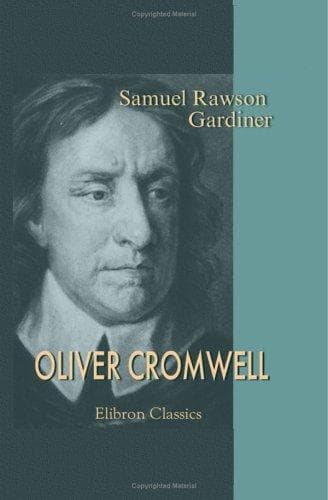
Cromwell, Oliver, 1599-1658; Great Britain -- History -- Commonwealth and Protectorate, 1649-1660
Much to Oliver's surprise, the news of the proceedings of his men in
Hispaniola aroused the bitterest indignation at Madrid, an indignation
already, to some extent, aroused when Blake sailed out through the
Straits of Gibraltar to meet and capture the treasure ships expected
from America. The features of Philip IV. as--thanks to the brush of
Velasquez--they meet us in every noted gallery in Europe, are not
those of a man remarkable for wisdom, but he had none of the lingering
hesitancy of his grandfather, Philip II. He ordered the seizure of the
property of English merchants in Spanish harbours; and Oliver, after
balancing for two years between France and Spain, had the question
decided by his own mistaken belief that the world of Elizabeth remained
unchanged. The breach with Spain necessitated a reconsideration of the
relations between England and France. Ever since his accession to the
Protectorate, Oliver had evaded the demands of the French Ambassador,
Bordeaux, for a cessation of the war of reprisals at sea which had been
bequeathed him by the Commonwealth. As English privateers captured
more prizes than those of the French, he was in no hurry to bring the
situation to an end till he obtained of Mazarin, the virtual ruler of
France, a tacit understanding that the Huguenots should no longer be
maltreated, and an express undertaking to expel from France the English
Royal family and the chief Royalists in attendance on the exiled Court.
Whilst these questions were still under discussion, an event occurred
which, more than any other single action in his life, brought into
relief the higher side of Cromwell's character and policy. In January,
1655, the young Duke of Savoy--or rather his mother, who, though he
had come to years of discretion, acted in his name--ordered that the
Vaudois, whose religion, though now akin to the Protestantism of the
seventeenth century, dated from mediæval times, should be removed from
the plain at the foot of the Piedmontese Valleys into which they had
spread, to the upper and barer reaches, on the pretext that they had
broken the bounds assigned them by his ancestors. In April his troops
entered the valley, slaying and torturing as they went. When the
news reached England in May, Oliver's heart was moved to its depths.
He ordered a day of humiliation to be held, and a house-to-house
visitation to collect money for the sufferers. Upwards of £38,000 was
gathered in the end, the Protector heading the list with £2,000. He
sent a Minister to Turin to remonstrate, but his warmest appeals were
addressed to Mazarin, the all-powerful Minister of Louis XIV., as
some French troops, acting as allies of the Duke in his war against
the Spaniards in Italy, had been concerned in the massacre. Mazarin
was plainly told that there would be no treaty with France till these
massacres were stopped. The French Minister had been so long deluded of
his hope of a treaty that this threat alone might not have terrified
Public-domain text, read in full here on John Shaqi.
Reviews
Reviews
No reviews yet
Be the first to share your thoughts on this work.
Elsewhere in the archive
Join the Discussion
Join the discussion
Sign in to leave a comment or review.
Sign InorCreate an account