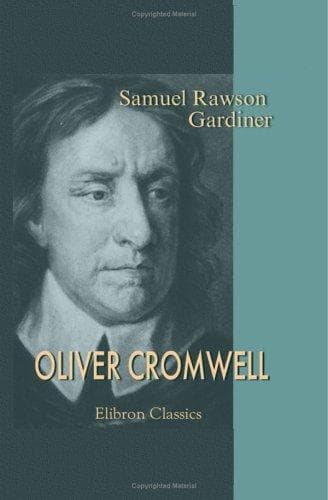
Cromwell, Oliver, 1599-1658; Great Britain -- History -- Commonwealth and Protectorate, 1649-1660
There is good reason to believe that Oliver consented willingly to the
vote. He was never one to persist in methods once adopted, if he could
obtain his larger aims in some other way. The debates had revealed that
the house was divided into two parties, a minority clinging to the army
as a political force, and a majority calling for the establishment of
the government on a civil basis. The latter was even more devoted to
the Protector than the former, and Oliver, who in his heart concurred
with their views, was prepared, as indeed he had been prepared in
1654, to submit the Instrument to revision. The difference was that
he was assured now--as he had not been assured then--that Parliament
would sustain the fundamental principles which he regarded as the most
precious part of the constitution.
In January, 1657, a fresh attempt to assassinate the Protector--this
time by Miles Sindercombe--gave reason, or perhaps excuse, for
loyal demonstrations, and a month later the House entered upon the
discussion of a proposal for a constitutional revision, ultimately
known as _The Humble Petition and Advice_, of which the article which
attracted the most general attention was that which reconstituted the
Kingship in the person of Oliver, with the power of nominating his
own successor. The demand for the revival of the Kingship was no mere
work of zealous flatterers. The crown was held in the House to be the
symbol of civilian as opposed to military government, but for this
reason the offer of it was assailed by the leading officers, headed
by Lambert who, in 1653, had offered the crown to the man to whom he
now refused it. So far as the officers were concerned, they appear to
have been actuated, in part at least, by a dread that a Parliamentary
Protectorate would in the end turn out to be other than a Puritan
Protectorate. Lambert's own motives were somewhat more difficult to
unravel. Possibly he regarded a Kingship by the grace of Parliament
less of a boon than a Kingship by the grace of the army. Still more
probably was he moved by a personal grievance in seeing Fleetwood,
who had now returned from Ireland, higher than himself in the favour
of the Protector, perhaps even in the favour of the army. In any case
he carried on the campaign with consummate skill, keeping aloof from
the constitutional question, and throwing all his strength into the
argument--which the rudest soldier could understand--that the army had
not rejected one king in order to set up another. When he won over
Fleetwood and Desborough, the son-in-law and brother-in-law of the
Protector, to his side, he had practically won the game, especially
as he was able to back a petition against a revival of the Royal
title by the subscription of a hundred officers. Oliver kept up the
negotiation with Parliament as long as he could, but in the end he
refused the crown offered to him rather than alienate the army. The
remaining articles of the Humble Petition and Advice were then agreed
Public-domain text, read in full here on John Shaqi.
Reviews
Reviews
No reviews yet
Be the first to share your thoughts on this work.
Elsewhere in the archive
Join the Discussion
Join the discussion
Sign in to leave a comment or review.
Sign InorCreate an account