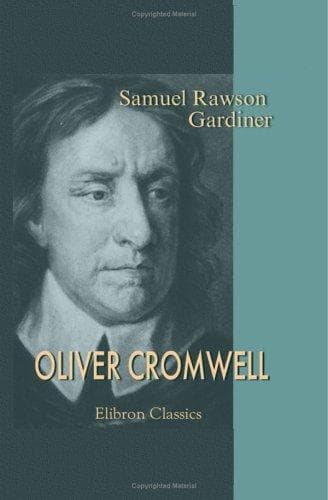
Cromwell, Oliver, 1599-1658; Great Britain -- History -- Commonwealth and Protectorate, 1649-1660
The wisdom of a foreign policy which gave England a land-frontier in
Europe has been often discussed, and the conflict of argument has
not yet died away. It is true that in later years this country has
had forced on it the task of securing colonial possessions which,
in some cases for thousands of miles, march with territories held
by independent, and possibly hostile States. There is, however,
no comparison between an enormous territory, such as the Dominion
of Canada, inhabited by an increasing and loyal population, and a
fortified post, such as that of Dunkirk, the inhabitants of which were
alien in race and religion from the English garrison which was to hold
them down, especially as Dunkirk was a mere port on the edge of a
Continent held by great nations, two of which coveted its possession,
and would certainly leave no stone unturned to recover it. The only
parallels in our history worth considering are the occupation of Calais
in the middle ages, and of Gibraltar in modern times. It is idle to
speculate whether, if Dunkirk had not been surrendered amicably to
France by Charles II., it would have undergone the fate of Calais, but
it is not idle to remind ourselves that, whilst Gibraltar is occupied
in order to keep the sea open, and has never been used as a threat to
the independence of Spain, Dunkirk, as we know from Thurloe, to whom
all the secrets of Oliver's mind were revealed, was occupied in the
first place, as a menace to the Dutch maritime power, and in the second
place, to enable England to interfere with effect against either France
or Spain, whilst it was believed by Mazarin that Oliver's main object
was to crush the growing power of France. These pretensions might be
condemned or defended on abstract grounds, leaving out of account any
particular circumstances or any particular time. What is absolutely
certain is that such a policy, if it were to be successful, required
not merely the prolongation of Oliver's life, but the continuation, and
more than the continuation of his military system. At a time when the
English nation--it matters not whether with just cause, or from mere
impatience of a taxation which it was well able to bear--was bitterly
complaining of the heavy burdens imposed by the necessity of keeping
up the existing army, Oliver was embarking on a foreign policy which
would topple down with a crash unless that army were doubled--perhaps
even trebled--to make head against the enemies it would arouse. It
was a policy condemned in advance if only by the desperate financial
embarrassments which must follow in its train, when France was no
longer bound to England by her need of help against Spain. The
hostility of France might indeed be confronted by a Government strong
in the devotion of its people, and in the accumulated wealth of another
half-century of commerce--strong too in an alliance with military
Powers, based on the need of joining in resistance to a common danger.
Public-domain text, read in full here on John Shaqi.
Reviews
Reviews
No reviews yet
Be the first to share your thoughts on this work.
Elsewhere in the archive
Join the Discussion
Join the discussion
Sign in to leave a comment or review.
Sign InorCreate an account