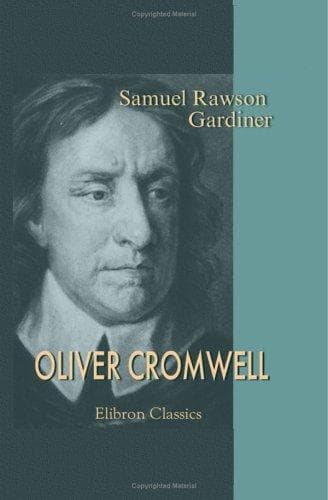
Cromwell, Oliver, 1599-1658; Great Britain -- History -- Commonwealth and Protectorate, 1649-1660
It was precisely in this direction that Oliver's mind was most
defective. From the beginning of the Protectorate he had overestimated
the danger to Protestantism from the Roman Catholic Powers, and had
striven in vain to form a great Protestant alliance to resist what was
scarcely more than an imaginary danger. The massacre of the Vaudois had
confirmed his belief that the danger was a permanent one, and his war
with Spain had brought him into sharp antagonism with a Roman Catholic
Power of intensest bigotry. We may therefore give full credence to
Thurloe when he adds to the causes which induced Oliver to occupy
Dunkirk, his hope that the possession of the place would be serviceable
to his great design of weakening not merely Spain, but the whole House
of Austria, as being engaged in a conspiracy for the injury and, if
possible, the destruction of Protestantism. That this view of the case
was a gross anachronism, no one familiar with the history of Europe
will now deny. Isolated instances indeed there were--and there were
likely to be more--of the persecution of Protestants by Roman Catholic
Governments, but the tendency to form European alliances on the basis
of religion was a thing of the past. So far indeed as Dunkirk was in
question--and both critics and admirers of the foreign policy of the
Protectorate have been apt to argue as if it concerned France and Spain
alone--Oliver's intentions in this direction are of little interest, as
he did not live long enough even to attempt to make his new port the
basis of a European war. It is in his Baltic policy that the defects of
his method were most clearly revealed.
Public-domain text, read in full here on John Shaqi.
Reviews
Reviews
No reviews yet
Be the first to share your thoughts on this work.
Elsewhere in the archive
Join the Discussion
Join the discussion
Sign in to leave a comment or review.
Sign InorCreate an account