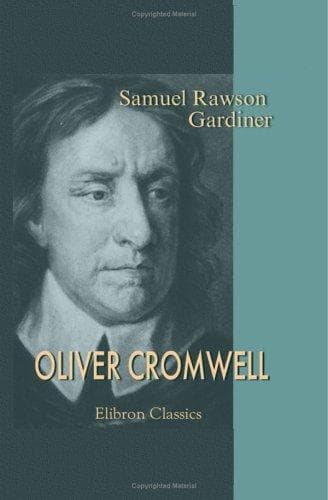
Cromwell, Oliver, 1599-1658; Great Britain -- History -- Commonwealth and Protectorate, 1649-1660
declaration intended to uphold the vote of No Addresses, in which
Charles's misdemeanours were set forth at length, somewhat in the
fashion of the Grand Remonstrance. His attempt to bring into England
Germans, Spaniards, Frenchmen, Lorrainers, and Danes as well as
Irishmen was one of the principal counts against him. Cromwell is even
said to have 'made a severe invective against monarchical government,'
though it is probable that his argument was directed less against a
hereditary chief-magistracy bound by constitutional limitations than
against a system under which the King retained the ultimate decision
of all questions in his own hands. At all events, he refused to commit
himself absolutely to Republicanism, thereby exasperating those who,
like Marten, and even his own bosom friend--the younger Vane--had come
to the conclusion that, in the England of that day, a Republic was the
only alternative to an absolute monarchy.
It was about this time that a meeting took place, the proceedings
at which were recorded by Edmund Ludlow, himself a Republican or
Commonwealth's-man--to use the term in use amongst contemporaries.
Anxious to bring men of different opinions into line against Charles,
Cromwell gave a dinner to the leaders of the various parties, after
which a conference was held in which, according to Ludlow, Cromwell and
his friends 'kept themselves in the clouds, and would not declare their
judgments either for a monarchical, aristocratical or democratical
government, maintaining that any of them might be good in themselves,
or for us according as Providence should direct us'. The old difference
of opinion between the men of practice and the men of theory was, on
this occasion, aggravated by the fact that many theoretical upholders
of a Commonwealth drew the very practical conclusion that not only were
Charles's subjects absolved from their allegiance, but that it was the
duty of Parliament to call the King to account for the blood that had
been shed in England in consequence of his misdeeds. The conference
begun in the interests of peace bade fair to lead to open division, and
Cromwell, to silence angry vituperation, flung a cushion at Ludlow's
head and ran downstairs. Ludlow in his turn threw the cushion back at
Cromwell, and, as he proudly boasted, 'made him hasten down faster than
he desired'. A rough piece of horseplay, it at all events served its
purpose in quieting a strife which, every minute that it lasted, was
doing injury to the cause which Cromwell desired to serve.
Public-domain text, read in full here on John Shaqi.
Reviews
Reviews
No reviews yet
Be the first to share your thoughts on this work.
Elsewhere in the archive
Join the Discussion
Join the discussion
Sign in to leave a comment or review.
Sign InorCreate an account