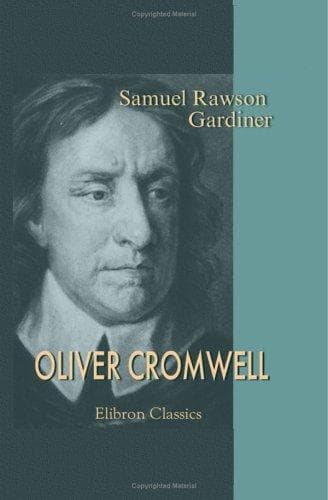
Cromwell, Oliver, 1599-1658; Great Britain -- History -- Commonwealth and Protectorate, 1649-1660
At no time did Cromwell fix beforehand the methods by which he
intended to work, though he never had any doubt of the object against
which his energies were to be directed. He had contended first against
irresponsible monarchical power, then in turn against military anarchy,
Presbyterian tyranny, the political supremacy of the army, and abstract
theories of government. He was ready to meet each danger as it arose,
with the help of all who, whatever their opinions on other points might
be, were ready to join him in attacking the abuse which he wished at
the time to abate. If, like Ludlow, they persisted in looking too far
ahead, there was nothing for it but to silence them, if it were but by
flinging cushions at their heads.
In the Spring of 1648 Cromwell and his political allies had thus
to deal with a very complicated situation. They had to face not
merely Charles's intrigue with the Scots, but also the widely spread
discontent in England. Especially in the towns, men were weary of
military dictation, and of the increased taxation by which the army
was supported. Parliament too was as unpopular as the army. Englishmen
were no less weary of the prolonged uncertainty which neither army nor
Parliament seemed capable of bringing to an end. In their longing for
a settled government, a considerable part of the population turned
their eyes to the throne, as the ancient basis of authority and order.
If England had been polled, there would probably have been a large
majority in favour of Charles's restoration to power, and yet, it was
precisely amongst those whose system was most democratic that the most
intense opposition to a restoration was to be found.
Public-domain text, read in full here on John Shaqi.
Reviews
Reviews
No reviews yet
Be the first to share your thoughts on this work.
Elsewhere in the archive
Join the Discussion
Join the discussion
Sign in to leave a comment or review.
Sign InorCreate an account