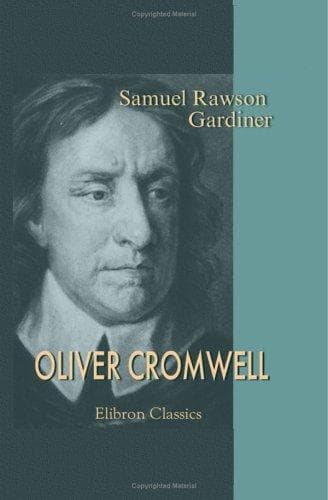
Cromwell, Oliver, 1599-1658; Great Britain -- History -- Commonwealth and Protectorate, 1649-1660
The first resistance to Parliament came from an unexpected quarter.
As early as on February 22, Colonel Poyer, the Governor of Pembroke
Castle, had refused to deliver up his charge till his arrears had
been paid, and on March 23 he had proceeded to seize the town. At
first no more than a local difficulty was apprehended, and Colonel
Horton was despatched to suppress the rising. On his arrival he wrote
that he was likely to have the whole of South Wales on his hands.
Almost at the same time it was known at Westminster that a Scottish
army was actually to be raised. Presbyterian as was the majority of
the English Parliament, it had no mind to have even its favourite
religion established by an invading army of Scots, especially as that
army would be the army of the Scottish nobility, who were supposed
not to feel any warm attachment to the Presbyterian cause except
so far as their own interests were connected with it. It was the
hesitation of the English Presbyterians between their political and
their ecclesiastical aims which alone could have given a free hand to
Fairfax and Cromwell. It was Cromwell who, seconded by Vane, carried
a vote in the House for granting concessions which the City under
the pressure of the recent intelligence, was now prepared to accept
as satisfactory. A further vote that the House would not alter the
fundamental government of the kingdom by King, Lords and Commons, was
supported by the leading Independents. The House then proceeded to
declare itself ready to concur in a settlement on the ground of the
propositions laid before the King at Hampton Court, that is to say, on
the ground of the establishment of Presbyterianism without any liberty
of conscience whatsoever. Whether Cromwell was in his place when the
last two votes were taken is uncertain. At all events we can hardly
be wrong in supposing that he had no objection to the Presbyterians
amusing themselves with another hopeless negotiation whilst the army
took the field. He had had too much experience of Charles's character
as a diplomatist to imagine that he was likely to aim at anything more
than hoodwinking his opponents till the time came when he might deem it
advisable to hoodwink his allies.
Public-domain text, read in full here on John Shaqi.
Reviews
Reviews
No reviews yet
Be the first to share your thoughts on this work.
Elsewhere in the archive
Join the Discussion
Join the discussion
Sign in to leave a comment or review.
Sign InorCreate an account