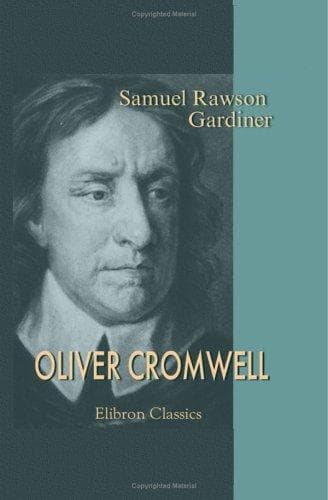
Cromwell, Oliver, 1599-1658; Great Britain -- History -- Commonwealth and Protectorate, 1649-1660
To what other conclusion could these men possibly come? How were they
likely to recognise the deeply seated belief in the justice of his
Church and cause which lay behind the slippery trickiness of Charles?
and how, even if they had recognised it, could they have counted it
to him for righteousness? For many a month Cromwell had staved off
this decision. Now, he could not reconcile it to his conscience to
stave it off any longer; his conscience in this, no doubt, concurring
with his interests. He left the Presbyterians at Westminster to
their own devices--to pass an ordinance which imposed the bitterest
penalties on heresy, and to toy with the idea of a fresh negotiation
with Charles, content that they had been brought into line with the
army in opposition to a Cavalier insurrection at home and a Scottish
invasion from abroad. Every indication served to convince the Houses of
the Royalist character of the insurrection. There were tumults either
actually breaking out or threatened in Suffolk, in Essex and in Surrey,
and in every case a resolution to support the King was either declared
or implied. Such a development was no more to the taste of the
Presbyterians than to that of the soldiers, and the army was therefore
able to calculate on the support of a Parliament which, though it might
detest the principles of the soldiers, was unable to dispense with
their services.
That army was not one to be easily defeated. Before Cromwell reached
his appointed station, he heard that Horton had overcome the Welshmen
at St. Fagans. The political effect of the victory was immense. "To
observe the strange alteration," wrote a London Independent to a friend
in the army, "the defeating of the Welsh hath made in all sorts is
admirable. The disaffected to the army of the religious Presbyterians
now fawn upon them--partly for fear of you, and partly in that they
think you will keep down the Royal party which threatened them, in
their doors, in the streets, to their faces with destruction, and put
no difference between Presbyterian and Independent." On May 19 the
Common Council of the City declared its readiness to live and die with
the Parliament, at the same time requesting that a fresh negotiation
should be opened with the King--a proposal which was at once accepted.
The Royalists were bitterly disappointed. "How long," jibed one of
them, "halt ye between two opinions? If Mammon be God, serve him; if
the Lord be God, serve Him. If Fairfax be King, serve him; if Charles
be King, restore him." To Fairfax and Cromwell the decision of the
City must have come as a great relief. The work before them was hard
enough, but there was no longer reason to despair.
Public-domain text, read in full here on John Shaqi.
Reviews
Reviews
No reviews yet
Be the first to share your thoughts on this work.
Elsewhere in the archive
Join the Discussion
Join the discussion
Sign in to leave a comment or review.
Sign InorCreate an account