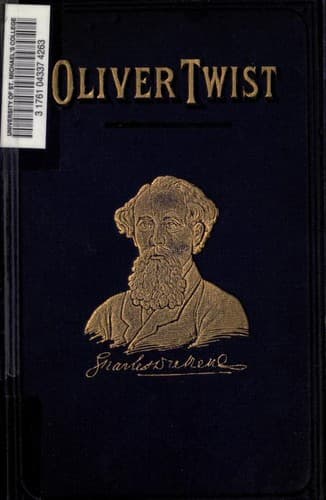
Bildungsromans; Boys -- Fiction; Criminals -- Fiction; Kidnapping victims -- Fiction; London (England) -- Fiction; Orphans -- Fiction
Oliver’s ailings were neither slight nor few. In addition to the pain
and delay attendant on a broken limb, his exposure to the wet and cold
had brought on fever and ague: which hung about him for many weeks, and
reduced him sadly. But, at length, he began, by slow degrees, to get
better, and to be able to say sometimes, in a few tearful words, how
deeply he felt the goodness of the two sweet ladies, and how ardently
he hoped that when he grew strong and well again, he could do something
to show his gratitude; only something, which would let them see the
love and duty with which his breast was full; something, however
slight, which would prove to them that their gentle kindness had not
been cast away; but that the poor boy whom their charity had rescued
from misery, or death, was eager to serve them with his whole heart and
soul.
“Poor fellow!” said Rose, when Oliver had been one day feebly
endeavouring to utter the words of thankfulness that rose to his pale
lips; “you shall have many opportunities of serving us, if you will. We
are going into the country, and my aunt intends that you shall
accompany us. The quiet place, the pure air, and all the pleasure and
beauties of spring, will restore you in a few days. We will employ you
in a hundred ways, when you can bear the trouble.”
“The trouble!” cried Oliver. “Oh! dear lady, if I could but work for
you; if I could only give you pleasure by watering your flowers, or
watching your birds, or running up and down the whole day long, to make
you happy; what would I give to do it!”
“You shall give nothing at all,” said Miss Maylie, smiling; “for, as I
told you before, we shall employ you in a hundred ways; and if you only
take half the trouble to please us, that you promise now, you will make
me very happy indeed.”
“Happy, ma’am!” cried Oliver; “how kind of you to say so!”
“You will make me happier than I can tell you,” replied the young lady.
“To think that my dear good aunt should have been the means of rescuing
any one from such sad misery as you have described to us, would be an
unspeakable pleasure to me; but to know that the object of her goodness
and compassion was sincerely grateful and attached, in consequence,
would delight me, more than you can well imagine. Do you understand
me?” she inquired, watching Oliver’s thoughtful face.
“Oh yes, ma’am, yes!” replied Oliver eagerly; “but I was thinking that
I am ungrateful now.”
“To whom?” inquired the young lady.
“To the kind gentleman, and the dear old nurse, who took so much care
of me before,” rejoined Oliver. “If they knew how happy I am, they
would be pleased, I am sure.”
“I am sure they would,” rejoined Oliver’s benefactress; “and Mr.
Losberne has already been kind enough to promise that when you are well
enough to bear the journey, he will carry you to see them.”
“Has he, ma’am?” cried Oliver, his face brightening with pleasure. “I
don’t know what I shall do for joy when I see their kind faces once
again!”
Public-domain text, read in full here on John Shaqi.
Reviews
Reviews
No reviews yet
Be the first to share your thoughts on this work.
Elsewhere in the archive
Join the Discussion
Join the discussion
Sign in to leave a comment or review.
Sign InorCreate an account