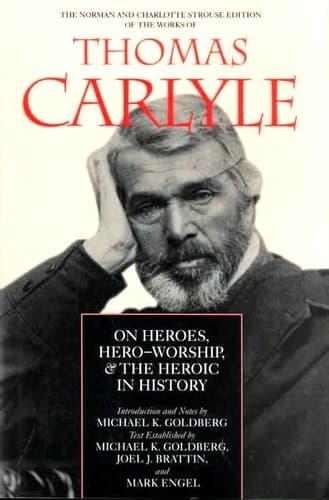
On Heroes, Hero-Worship, and the Heroic in HistoryCarlyle, Thomas
Philosophy
On Heroes, Hero-Worship, and the Heroic in History
Carlyle, Thomas
Hero worship; Heroes
One understands moreover how, though he could not speak in Parliament,
he might _preach_, rhapsodic preaching; above all, how he might be great
in extempore prayer. These are the free outpouring utterances of what is
in the heart: method is not required in them; warmth, depth, sincerity
are all that is required. Cromwell's habit of prayer is a notable
feature of him. All his great enterprises were commenced with prayer.
In dark inextricable-looking difficulties, his Officers and he used to
assemble, and pray alternately, for hours, for days, till some definite
resolution rose among them, some "door of hope," as they would name it,
disclosed itself. Consider that. In tears, in fervent prayers, and cries
to the great God, to have pity on them, to make His light shine before
them. They, armed Soldiers of Christ, as they felt themselves to be;
a little band of Christian Brothers, who had drawn the sword against
a great black devouring world not Christian, but Mammonish,
Devilish,--they cried to God in their straits, in their extreme need,
not to forsake the Cause that was His. The light which now rose upon
them,--how could a human soul, by any means at all, get better light?
Was not the purpose so formed like to be precisely the best, wisest, the
one to be followed without hesitation any more? To them it was as the
shining of Heaven's own Splendor in the waste-howling darkness; the
Pillar of Fire by night, that was to guide them on their desolate
perilous way. _Was_ it not such? Can a man's soul, to this hour, get
guidance by any other method than intrinsically by that same,--devout
prostration of the earnest struggling soul before the Highest, the
Giver of all Light; be such _prayer_ a spoken, articulate, or be it a
voiceless, inarticulate one? There is no other method. "Hypocrisy"? One
begins to be weary of all that. They who call it so, have no right to
speak on such matters. They never formed a purpose, what one can call
a purpose. They went about balancing expediencies, plausibilities;
gathering votes, advices; they never were alone with the _truth_ of a
thing at all.--Cromwell's prayers were likely to be "eloquent," and much
more than that. His was the heart of a man who _could_ pray.
Public-domain text, read in full here on John Shaqi.
Reviews
Reviews
No reviews yet
Be the first to share your thoughts on this work.
Elsewhere in the archive
Join the Discussion
Join the discussion
Sign in to leave a comment or review.
Sign InorCreate an account