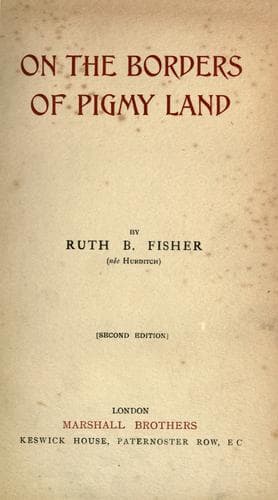
Missions -- Uganda; Negrillos; Uganda -- Description and travel
As we landed from the boats and looked up at this town we really asked
ourselves if this were Uganda. There are rows of neat villas with the
strips of gardens back and front resembling the bijous of London suburban
life; splendid wide roads with avenues of trees planted; a market with
an English butcher, a dairy, an Indian bakery where delicious little
loaves can be purchased for four annas, and an aggressive Indian firm
that is the William Whiteley of Uganda, and manufactures mineral waters
at two annas per bottle, are some among the many surprises. There is
a very cosmopolitan population, and comparatively few of the real
natives—Baganda—are seen in the town. The fifty or more Europeans made
it feel very homelike after the isolated life in Toro; and yet after the
first surprised impressions had partially worn off, one was conscious
of two distinct elements running side by side—the English and the
African—without actually becoming assimilated the one by the other. The
result was that so many reminders of England brought with them feelings
of home-sickness, but the next moment one was sympathising with the
country yokel in London who pined for the rusticity of village home life.
Our four days there were spent very pleasantly. Colonel Sadler, H.M.
Commissioner, Mrs. Sadler, and several friends were most kind and
hospitable; indeed we were almost strangers to our tents.
A visit to the Botanical Gardens was most interesting. Mr. Mahon, who
was then in charge, took us round and pointed out the tea, coffee, cocoa
and cotton shrubs which gave promise of agreeing very amiably with their
newly-adopted land. Fruit trees, vines and pine apples were also being
experimented on, and the flower beds were aflame with colour. The idea
is, I believe, to test what flourishes successfully in the Uganda soil,
then to send out cuttings and encourage the cultivation of that plant
throughout the Protectorate. Colonel Coles, who is in command of the
troops, is a very keen horticulturalist, and has been most successful in
rose-growing and in bringing to perfection the native crinum lily.
Leaving Entebbe, we made for Port Munyonyo by canoe, which took six hours
in consequence of a wind working against us all the way. Reaching the
Port at 5.0 p.m. we had no time to inspect the vigorous dhow-building
that was in operation. We hurried off on our seven to eight mile walk
into Mengo, which we reached just after seven o’clock. A roast leg of
goat and steaming potatoes were being served up by our kind hostess as we
entered. I think we had rarely enjoyed a dinner more than that one, as
we had eaten nothing since 7.0 a.m. excepting two cold sausages and some
bread and milk, the only things procurable from our food basket in the
canoe.
Public-domain text, read in full here on John Shaqi.
Reviews
Reviews
No reviews yet
Be the first to share your thoughts on this work.
Elsewhere in the archive
Join the Discussion
Join the discussion
Sign in to leave a comment or review.
Sign InorCreate an account