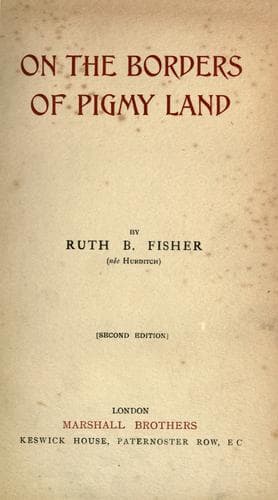
Missions -- Uganda; Negrillos; Uganda -- Description and travel
Excepting in the case of old people, everyone in Uganda desirous of being
baptised must first learn to read. When they have passed the standard
required of them and are ready to enter a baptismal class, they are
obliged to bring with them two witnesses or sponsors who can vouch for
the sincerity of their belief by the outward conformity of their lives
to the teaching of Christianity. Then, for from three to six months
instruction is given them for two hours four days a week. At the end
of this course of teaching each candidate is carefully examined, and
should the result be satisfactory the name is read out twice in Church
and anyone is asked to bring forward a reason, if such there be, for
keeping back the candidate from baptism. Thus every care is taken to test
converts thoroughly before admitting them into this sacred rite.
Toro very soon sought to emulate the church in Uganda in recognising its
responsibility to those living in darkness around, and one year after the
founding of the work in the capital, young men came forward and offered
themselves to be trained as teachers to the distant villages. Apart from
an honest desire to enlighten those who have not received the Truth as
it is in Christ Jesus, there is little to tempt men to devote themselves
to this service—the only payment they receive is sufficient unbleached
calico with which to clothe themselves. The people in the villages who
have sent in the pressing request for a teacher are expected to build
their own “synagogue,” as well as house, and feed the teacher sent to
them. In this way the whole native church organisation throughout the
Protectorate is self-supporting. In Toro alone, seven years after the
introduction of Christianity, there were no less than eighty-five mission
stations established throughout the Kingdom, with a staff of one ordained
Muganda deacon and one hundred and five paid men and women teachers, all
supported entirely by the young Christian Church. Besides these there was
a strong band of honorary workers who taught in the capital on weekdays
or went out to the near villages on Sundays.
Once a year there is a “review of the troops,” when all the
teachers—regulars, reservists, and volunteers—come into the capital for
re-equipment and reappointment.
Public-domain text, read in full here on John Shaqi.
Reviews
Reviews
No reviews yet
Be the first to share your thoughts on this work.
Elsewhere in the archive
Join the Discussion
Join the discussion
Sign in to leave a comment or review.
Sign InorCreate an account