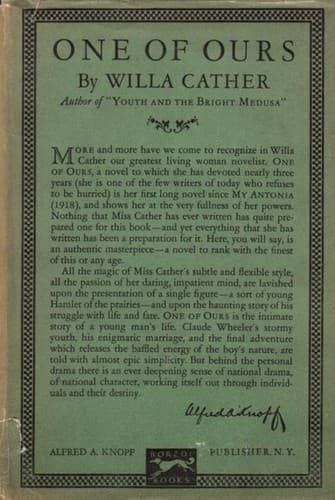
Farm life -- Fiction; Nebraska -- Fiction; Soldiers -- Fiction; War stories; World War, 1914-1918 -- Fiction
In a wooden chamber at the end of the passage, Claude took off
his coat, and set to work to make himself as tidy as possible.
Hot water and scented soap were in themselves pleasant things.
The dresser was an old goods box, stood on end and covered with
white lawn. On it there was a row of ivory toilet things, with
combs and brushes, powder and cologne, and a pile of white
handkerchiefs fresh from the iron. He felt that he ought not to
look about him much, but the odor of cleanness, and the
indefinable air of personality, tempted him. In one corner, a
curtain on a rod made a clothes-closet; in another was a low iron
bed, like a soldier's, with a pale blue coverlid and white
pillows. He moved carefully and splashed discreetly. There was
nothing he could have damaged or broken, not even a rug on the
plank floor, and the pitcher and hand-basin were of iron; yet he
felt as if he were imperiling something fragile.
When he came out, the table in the living room was set for three.
The stout old dame who was placing the plates paid no attention
to him,--seemed, from her expression, to scorn him and all his
kind. He withdrew as far as possible out of her path and picked
up a book from the table, a volume of Heine's Reisebilder in
German.
Before lunch Mlle. de Courcy showed him the store room in the
rear, where the shelves were stocked with rows of coffee tins,
condensed milk, canned vegetables and meat, all with American
trade names he knew so well; names which seemed doubly familiar
and "reliable" here, so far from home. She told him the people in
the town could not have got through the winter without these
things. She had to deal them out sparingly, where the need was
greatest, but they made the difference between life and death.
Now that it was summer, the people lived by their gardens; but
old women still came to beg for a few ounces of coffee, and
mothers to get a can of milk for the babies.
Claude's face glowed with pleasure. Yes, his country had a long
arm. People forgot that; but here, he felt, was some one who did
not forget. When they sat down to lunch he learned that Mlle. de
Courcy and Madame Barre had been here almost a year now; they
came soon after the town was retaken, when the old inhabitants
began to drift back. The people brought with them only what they
could carry in their arms.
"They must love their country so much, don't you think, when they
endure such poverty to come back to it?" she said. "Even the old
ones do not often complain about their dear things--their linen,
and their china, and their beds. If they have the ground, and
hope, all that they can make again. This war has taught us all
how little the made things matter. Only the feeling matters."
Public-domain text, read in full here on John Shaqi.
Reviews
Reviews
No reviews yet
Be the first to share your thoughts on this work.
Elsewhere in the archive
Join the Discussion
Join the discussion
Sign in to leave a comment or review.
Sign InorCreate an account