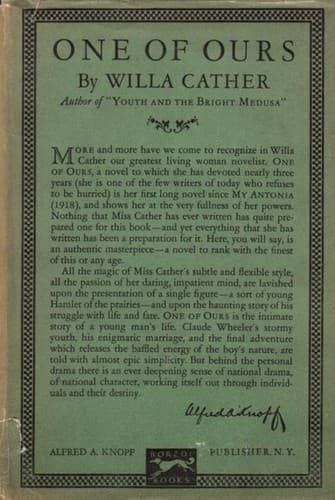
Farm life -- Fiction; Nebraska -- Fiction; Soldiers -- Fiction; War stories; World War, 1914-1918 -- Fiction
Claude was well enough to go into the fields before the harvest
was over. The middle of July came, and the farmers were still
cutting grain. The yield of wheat and oats was so heavy that
there were not machines enough to thrash it within the usual
time. Men had to await their turn, letting their grain stand in
shock until a belching black engine lumbered into the field.
Rains would have been disastrous; but this was one of those "good
years" which farmers tell about, when everything goes well. At
the time they needed rain, there was plenty of it; and now the
days were miracles of dry, glittering heat.
Every morning the sun came up a red ball, quickly drank the dew,
and started a quivering excitement in all living things. In great
harvest seasons like that one, the heat, the intense light, and
the important work in hand draw people together and make them
friendly. Neighbours helped each other to cope with the
burdensome abundance of man-nourishing grain; women and children
and old men fell to and did what they could to save and house it.
Even the horses had a more varied and sociable existence than
usual, going about from one farm to another to help neighbour
horses drag wagons and binders and headers. They nosed the colts
of old friends, ate out of strange mangers, and drank, or refused
to drink, out of strange water-troughs. Decrepit horses that
lived on a pension, like the Wheelers' stiff-legged Molly and
Leonard Dawson's Billy with the heaves--his asthmatic cough could
be heard for a quarter of a mile--were pressed into service now.
It was wonderful, too, how well these invalided beasts managed to
keep up with the strong young mares and geldings; they bent their
willing heads and pulled as if the chafing of the collar on their
necks was sweet to them.
The sun was like a great visiting presence that stimulated and
took its due from all animal energy. When it flung wide its cloak
and stepped down over the edge of the fields at evening, it left
behind it a spent and exhausted world. Horses and men and women
grew thin, seethed all day in their own sweat. After supper they
dropped over and slept anywhere at all, until the red dawn broke
clear in the east again, like the fanfare of trumpets, and nerves
and muscles began to quiver with the solar heat.
Public-domain text, read in full here on John Shaqi.
Reviews
Reviews
No reviews yet
Be the first to share your thoughts on this work.
Elsewhere in the archive
Join the Discussion
Join the discussion
Sign in to leave a comment or review.
Sign InorCreate an account