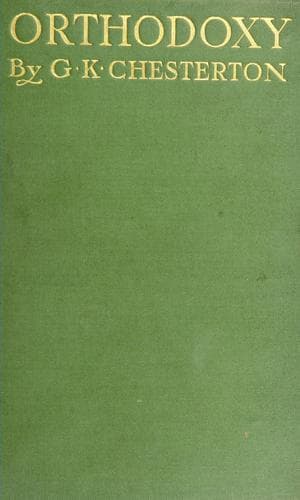
Apologetics; Chesterton, G. K. (Gilbert Keith), 1874-1936; Christianity -- Essence, genius, nature
And now I began to find that this duplex passion was the Christian key
to ethics everywhere. Everywhere the creed made a moderation out of the
still crash of two impetuous emotions. Take, for instance, the matter of
modesty, of the balance between mere pride and mere prostration. The
average pagan, like the average agnostic, would merely say that he was
content with himself, but not insolently self-satisfied, that there were
many better and many worse, that his deserts were limited, but he would
see that he got them. In short, he would walk with his head in the air;
but not necessarily with his nose in the air. This is a manly and
rational position, but it is open to the objection we noted against the
compromise between optimism and pessimism--the "resignation" of Matthew
Arnold. Being a mixture of two things, it is a dilution of two things;
neither is present in its full strength or contributes its full colour.
This proper pride does not lift the heart like the tongue of trumpets;
you cannot go clad in crimson and gold for this. On the other hand, this
mild rationalist modesty does not cleanse the soul with fire and make it
clear like crystal; it does not (like a strict and searching humility)
make a man as a little child, who can sit at the feet of the grass. It
does not make him look up and see marvels; for Alice must grow small if
she is to be Alice in Wonderland. Thus it loses both the poetry of
being proud and the poetry of being humble. Christianity sought by this
same strange expedient to save both of them.
Public-domain text, read in full here on John Shaqi.
Reviews
Reviews
No reviews yet
Be the first to share your thoughts on this work.
Elsewhere in the archive
Join the Discussion
Join the discussion
Sign in to leave a comment or review.
Sign InorCreate an account