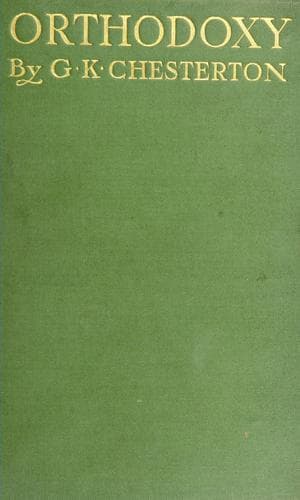
Apologetics; Chesterton, G. K. (Gilbert Keith), 1874-1936; Christianity -- Essence, genius, nature
I passed on to the next necessity of any ideal of progress. Some people
(as we have said) seem to believe in an automatic and impersonal
progress in the nature of things. But it is clear that no political
activity can be encouraged by saying that progress is natural and
inevitable; that is not a reason for being active, but rather a reason
for being lazy. If we are bound to improve, we need not trouble to
improve. The pure doctrine of progress is the best of all reasons for
not being a progressive. But it is to none of these obvious comments
that I wish primarily to call attention.
The only arresting point is this: that if we suppose improvement to be
natural, it must be fairly simple. The world might conceivably be
working towards one consummation, but hardly towards any particular
arrangement of many qualities. To take our original simile: Nature by
herself may be growing more blue; that is, a process so simple that it
might be impersonal. But Nature cannot be making a careful picture made
of many picked colours, unless Nature is personal. If the end of the
world were mere darkness or mere light it might come as slowly and
inevitably as dusk or dawn. But if the end of the world is to be a piece
of elaborate and artistic chiaroscuro, then there must be design in it,
either human or divine. The world, through mere time, might grow black
like an old picture, or white like an old coat; but if it is turned
into a particular piece of black and white art--then there is an artist.
Public-domain text, read in full here on John Shaqi.
Reviews
Reviews
No reviews yet
Be the first to share your thoughts on this work.
Elsewhere in the archive
Join the Discussion
Join the discussion
Sign in to leave a comment or review.
Sign InorCreate an account