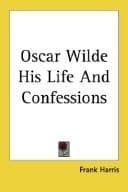
Oscar Wilde, His Life and Confessions — Volume 1Harris, Frank
History
Oscar Wilde, His Life and Confessions — Volume 1
Harris, Frank
Authors, Irish -- 19th century -- Biography; Wilde, Oscar, 1854-1900
Why had not Mr. Carson put some of the young men he spoke of in the box? Would
he be able to do that? He talked of Taylor as "the pivot of the case," and
gibed at the prosecution for not putting Taylor in the box. Would he put Taylor
in the box? And why, if he had such witnesses at his beck and call, should he
lay stress on the flimsy, weak evidence to be drawn from passages in books and
poems and letters? One thing was clear: if he was able to put any of the young
men in the box about whom he had examined Oscar, Oscar was ruined. Even if he
rested his defence on the letters and poems he'd win and Oscar would be
discredited, for already it was clear that no jury would give Oscar Wilde a
verdict against a father trying to protect his son. The issue had narrowed down
to terrible straits: would it be utter ruin to Oscar or merely loss of the case
and reputation? We had only sixteen hours to wait; they seemed to me to hold
the last hope.
I drove to Tite Street, hoping to see Oscar. I was convinced that Carson had
important witnesses at his command, and that the outcome of the case would be
disastrous. Why should not Oscar even now, this very evening, cross to Calais,
leaving a letter for his counsel and the court abandoning the idiotic
prosecution.
The house at Tite Street seemed deserted. For some time no one answered my
knocking and ringing, and then a man-servant simply told me that Mr. Wilde was
not in: he did not know whether Mr. Wilde was expected back or not; did not
think he was coming back. I turned and went home. I thought Oscar would
probably say to me again:
"I can do nothing, Frank, nothing."
. . . . . . .
The feeling in the court next morning was good tempered, even jaunty. The
benches were filled with young barristers, all of whom had made up their minds
that the testimony would be what one of them called "nifty." Everyone treated
the case as practically over.
"But will Carson call witnesses?" I asked.
"Of course he will," they said, "but in any case Wilde does not stand a ghost of
a chance of getting a verdict against Queensberry; he was a bally fool to bring
such an action."
"The question is," said someone, "will Wilde face the music?"
My heart leapt. Perhaps he had gone, fled already to France to avoid this
dreadful, useless torture. I could see the hounds with open mouths, dripping
white fangs, and greedy eyes all closing in on the defenceless quarry. Would
the huntsman give the word? We were not left long in doubt.
Mr. Carson continued his statement for the defence. He had sufficiently
demonstrated to the jury, he thought, that, so far as Lord Queensberry was
concerned, he was absolutely justified in bringing to a climax in the way he
had, the connection between Mr. Oscar Wilde and his son. A dramatic pause.
Public-domain text, read in full here on John Shaqi.
Reviews
Reviews
No reviews yet
Be the first to share your thoughts on this work.
Elsewhere in the archive
Join the Discussion
Join the discussion
Sign in to leave a comment or review.
Sign InorCreate an account