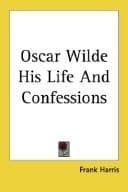
Oscar Wilde, His Life and Confessions — Volume 1Harris, Frank
History
Oscar Wilde, His Life and Confessions — Volume 1
Harris, Frank
Authors, Irish -- 19th century -- Biography; Wilde, Oscar, 1854-1900
"Some people don't like them," the quick Italian answered immediately.
"Oscar Wilde," I remarked casually, "is a great friend of mine," but the super-
subtle Italian was already warned.
"A clever writer, I believe," he said, smiling in bland acquiescence.
This incident gave me warning, strengthened again in me the exact apprehension
and suspicion which the Douglas letter had bred. Oscar I knew was too self-
centred, went about too continually with admirers to have any understanding of
popular feeling. He would be the last man to realize how fiercely hate, malice
and envy were raging against him. I wanted to warn him; but hardly knew how to
do it effectively and without offence: I made up my mind to keep my eyes open
and watch an opportunity.
A little later I gave a dinner at the Savoy and asked him to come. He was
delightful, his vivacious gaiety as exhilarating as wine. But he was more like
a Roman Emperor than ever: he had grown fat: he ate and drank too much; not that
he was intoxicated, but he became flushed, and in spite of his gay and genial
talk he affected me a little unpleasantly; he was gross and puffed up. But he
gave one or two splendid snapshots of actors and their egregious vanity. It
seemed to him a great pity that actors should be taught to read and write: they
should learn their pieces from the lips of the poet.
"Just as work is the curse of the drinking classes of this country," he said
laughing, "so education is the curse of the acting classes."
Yet even when making fun of the mummers there was a new tone in him of arrogance
and disdain. He used always to be genial and kindly even to those he laughed
at; now he was openly contemptuous. The truth is that his extraordinarily
receptive mind went with an even more abnormal receptivity of character: unlike
most men of marked ability, he took colour from his associates. In this as in
love of courtesies and dislike of coarse words he was curiously feminine.
Intercourse with Beardsley, for example, had backed his humorous gentleness with
a sort of challenging courage; his new intimacy with Lord Alfred Douglas, coming
on the top of his triumph as a playwright, was lending him aggressive self-
confidence. There was in him that "hubris" (insolent self-assurance) which the
Greek feared, the pride which goeth before destruction. I regretted the change
in him and was nervously apprehensive.
After dinner we all went out by the door which gives on the Embankment, for it
was after 12.30. One of the party proposed that we should walk for a minute or
two--at least as far as the Strand, before driving home. Oscar objected. He
hated walking; it was a form of penal servitude to the animal in man, he
declared; but he consented, nevertheless, under protest, laughing. When we
were going up the steps to the Strand he again objected, and quoted Dante's
famous lines:
Public-domain text, read in full here on John Shaqi.
Reviews
Reviews
No reviews yet
Be the first to share your thoughts on this work.
Elsewhere in the archive
Join the Discussion
Join the discussion
Sign in to leave a comment or review.
Sign InorCreate an account