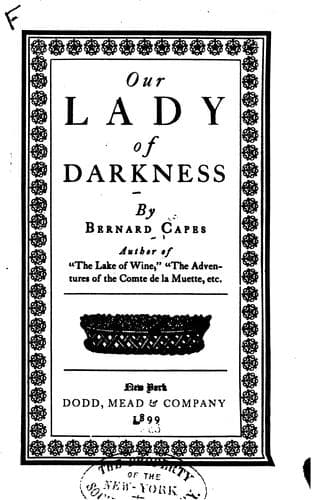
British -- France -- Fiction; France -- History -- Revolution, 1789-1799 -- Fiction; Historical fiction
“I have eschewed all the frivolity,” she said. “It is only now that I
desire for others to taste sweetly of the fruits of my experience. I
am like a nun wishing to dictate the high morality from her cell. The
world passes before my window in review, and I applaud or condemn. Is
it that I am to be accused of self-interest, of intrigue, because I
would convert my hard-wrung knowledge to the profit of my fellows? Yet
they pursue me with hate and menace. My reputation is the sport of
calumny; my life hangs by a thread. I write to monseigneur, and he
aggravates, while seeking to allay, my fears. I write to M. Fox, and
he laugh politely in my face. My friends heere, that I thought, turn
against me--Sir Gage; Madame Young, also, that is prejudice of that
Mees Burrnee you all love so. And she is a tower of strength, the
little Fannee--oh yes! but steef, like the tower there. That is the
same wis you all. One must evaire conform to your tradeetions or you
look asquint.”
“I think you exaggerate the danger,” said Mr Sheridan soberly. “But
whatever it be, here am I come down from London to your counsel and
command.”
Madame rose from her seat and rested her long fingers caressingly on
the speaker’s shoulder.
“_Mon chevalier, mon très cher ami_,” she said, some real emotion in
her voice, “forrgeeve me. It would be good of you at any time; but
now, now! The pretty bird, the sweet _rossignol_, that cried into the
night and was hearkened of an angel! Ah! she has no longer of the
desolation of the song that must hush itself weeping upon the heart!”
She pressed her other hand to her bosom. Her companion leaned down a
moment, his fingers shading his eyes.
“The desolation!” he muttered. “Yes, yes; but for us now there is a
deeper silence in the woods.”
They spoke of his wife, who had died but a few months previously.
Perhaps the great man had been as faithful to her as it was the
fashion for men, great and little, to be in those days to their
partners. At any rate, he had loved her to the end--in his own way. _A
propos_ of which it may be recorded as richly characteristic of him
how, while this same wife lay a-dying, he had been known to ease his
heart of sorrow by scribbling verses to Pamela (then living in Bath),
in whose beauty he had found, or professed to find, a reflection of
his Delia’s old-time fairness.
Now, fortuitously, the little sentimental passage was put an abrupt
end to; for, as she leaned, madame all of a sudden started violently
and uttered a staccato shriek.
“_Le voilà_, the _triste_ dark stranger! He come again; he come
always! You tell me now there is no purrepus in this devilish
haunting?”
She retreated, backing into the room, shrinking without the malignant
focus of any stealthy glance directed at her from the road outside. Mr
Sheridan jumped to his feet and looked from the window. Strolling past
in the sunlight, with an air of studied preoccupation upon his face,
strolled a melancholy young man of enigmatical aspect.
Public-domain text, read in full here on John Shaqi.
Reviews
Reviews
No reviews yet
Be the first to share your thoughts on this work.
Elsewhere in the archive
Join the Discussion
Join the discussion
Sign in to leave a comment or review.
Sign InorCreate an account