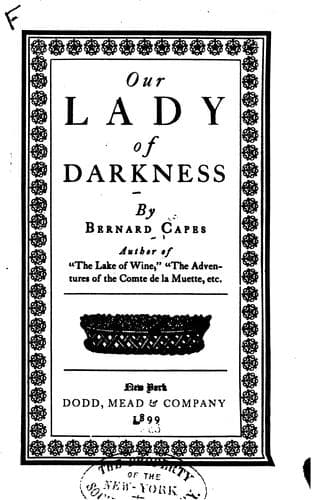
British -- France -- Fiction; France -- History -- Revolution, 1789-1799 -- Fiction; Historical fiction
He looked up with a sudden start. Something--he could not describe
what--like the silence that succeeds the heavy slamming of a door,
seemed to have gripped the world. The heat for days had been immense
and cruel. Men, roysterers and blasphemers, were come to a mean
inclination to expend what little breath was left to them in prayer. A
habit of stealthily examining the face of the heavens for signs
significant of the approaching “black death” of the storm was common.
The water seemed to steam in the kennels, the lead to crackle in the
gutters. Some inhuman outcome, it was predicted, of these unnatural
conditions must result. And now at last had the plague-stroke fallen?
Whatever it was--this inexplicable turn of the wheel--the tension of
existence drew to near snapping-point under it. Poor souls crept for
pools of shadow as if these were Bethesdas; here and there one dropped
upon the pavement, and was rescued, as under fire, by a companion; the
wail of half-stifled infants came through open windows; the sun was a
crown of thorns to the earth.
The streets, at the flood of noon, grew almost untenable. Ned--perhaps
from some vague association of ideas, the result of his dreamings upon
English lanes--left the town and, with the desire for trees compelling
him, took half-unconsciously the Méricourt road. It may have been
instinct merely that directed him. He had thought since his
coming--how could he help it?--of Théroigne, of Nicette, of all his
old connection with the strange little village. But he had no desire
to renew his acquaintance with the people of that ancient comedy--so,
now, it seemed to him. And surely by this time a new piece must hold
the stage; the old masks must be crumbled away or repainted to other
expressions. It was so long ago. He had leapt the boundary-river of
youth in the interval. He could have no place at last in the life of
the little hamlet by the woods.
It may have been the sudden realisation of this, his grown
emancipation, that tempted him all in a moment, and quite strangely,
to the desire to look once more upon the scenes that, until within the
last few minutes, he had had no least wish to revisit. It may have
been that he was driven onward simply by the goad of his most haunting
distress--that fancy of Mr Sheridan greatly profiting by a rival’s
absence--and by the thought of the intolerable period of mental
suspense and bodily discomfort he must suffer down there in the town,
until his interview with M. de Lawoestine should give a direction one
way or the other to his mission. Such considerations may have urged
him; or--with a bow of deference to the necessitarians--no
consideration at all, but a fatality.
Public-domain text, read in full here on John Shaqi.
Reviews
Reviews
No reviews yet
Be the first to share your thoughts on this work.
Elsewhere in the archive
Join the Discussion
Join the discussion
Sign in to leave a comment or review.
Sign InorCreate an account