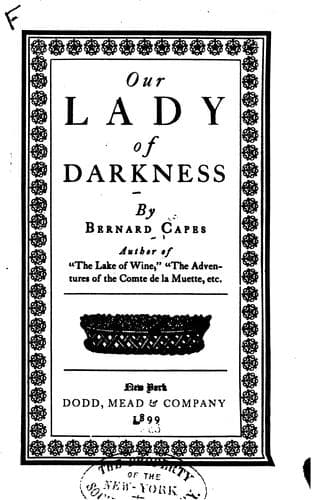
British -- France -- Fiction; France -- History -- Revolution, 1789-1799 -- Fiction; Historical fiction
By-and-by, sick at last of inaction, the poor fellow took to the
streets, restlessly traversing all quarters of the city--its
bye-lanes, its loaded thoroughfares--both by day and lamp-light. Once
he made his way to the now ancient ruins of the Bastille, and dully
leaving them after a dull inspection--or rather retrospection--looked
half curiously up at his old lodgings, yet had not the spirit to visit
them and Madame Gamelle. Once a languid thrill penetrated his torpor
upon his chancing upon view of an old acquaintance, the Chevalier
d’Eon, so queerly associated with a certain episode in his vanished
life. He passed the strange creature in the Thuilleries gardens,
whither he had come years ago to see a balloon ascend. She stared him
full in the face, but without recognition, as she went by. Her eyes
bagged in their sockets; she looked old and shabby--an improvident
actress retired upon scant savings. Already her gaze had grown
unspeculative; the first menace of senility suggested itself in the
drooping of her fat old jaw. She had come over from England, Ned
learned, a year ago, to petition the National Assembly--in the days
before its dissolution--for leave to resume her helmet and her sabre
and to serve in the army. Her request had received the double honour
of applause and of relegation to the official minutes--where it slept
forgotten. The poor chevalier must consign herself gracefully to
oblivion--which no actor or actress ever did. She lived on at Paris a
few months longer--a decaying old body with a grievance; then returned
for the last time to England, where, dying by-and-by in poverty, and
being handed over to the final merciless inquisition of the mortuary,
she was adjudged--a male impostor, and so committed to a dishonoured
grave.
Upon Egalité (but recently so designated) Ned happened from time to
time, yet only to understand that this would-be popular constituent
was resolved upon “cutting” him, a titled aristocrat, from popular
motives. Therefore, despite the gnawing of the fox of anxiety at his
ribs, the young Englishman, in his pride, would make no appeal to the
man who alone could ease his torment; but he endeavoured to ascertain,
through indirect report, what were the chances of an early return to
Paris on the part of certain notable emigrants; and in the meantime he
must settle himself down, with what remnants of philosophy he could
command, to a life of miserable inaction and irresolution.
Then, once upon a day, behold! into his field of vision, the spectrum
of a ghost more remotely haunting than any familiar to his recenter
experience, flashed Théroigne, “Our Lady of Darkness,” the realised
presentment of a destiny long foreshadowed. And henceforth it was as
if he had been hurled into one of those red arteries of fatality (of
which the just-erected guillotine was as the throbbing heart) that
laced the city in all directions.
Public-domain text, read in full here on John Shaqi.
Reviews
Reviews
No reviews yet
Be the first to share your thoughts on this work.
Elsewhere in the archive
Join the Discussion
Join the discussion
Sign in to leave a comment or review.
Sign InorCreate an account