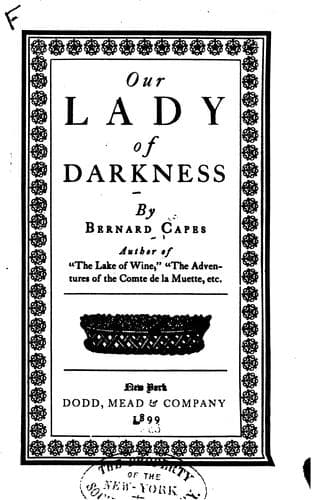
British -- France -- Fiction; France -- History -- Revolution, 1789-1799 -- Fiction; Historical fiction
Ned gasped and stared. He had not alighted on this woman--had recalled
her only fitfully--since the night when she fled from his uncle’s
house. Even Madame de Lawoestine’s reference to her had affected him
but indifferently. If, during his present sojourn in Paris, he,
absorbed in more introspective searchings, had heard casual mention of
the “Liége courtesan,” the “_coryphée_ of the Orleanists,” the
beloved (according to the wits of _Les Actes des Apôtres_) of the
Deputy Populus (who did not so much as know her), a least desire to
identify this reputation with the one of his experience had not
overtaken him. Théroigne--were it, indeed, the Théroigne of his
knowledge--had only followed the course he might have predicted for
her. To drain the rich for the benefit of the needy--that were a noble
form of solicitation. To feed starving patriots and their cause with
the fruits of her dishonour was a rendering of the theme that scarcely
commended itself to other than Parisian morals. Yet he had lost sight,
no doubt, of the motive that induced her to wage war, by whatever
means, upon the order patrician. It was to be recalled to his memory.
For now, suddenly, he was face to face with the embodiment of a
passion to whose early processes he had unwittingly contributed. The
girl saw, halted her vociferous troupe, and the next instant came
towards him. A fantastic figure, a thing of shreds and gaudy tatters,
detached itself from the throng and followed at her heels.
“_Corne de Dieu_!” muttered Vergniaud, “the dog too?”
Théroigne stopped in front of the Englishman--a presentment, in flesh
and clothing, of vivid, barbaric licence. Her eyes sparkled; her
cheeks glowed. For four years the “Defier of God,” she had walked with
her face to the sun. She was, and was to be, “Mater Tenebrarum--the
mother of lunacies, the suggestress of suicides”--a flaming evolution
from the scorned and abandoned village beauty.
She had on a little military jacket of dark-blue, over a white
chemisette cut low to her swelling figure; a tricolour sash, in which
was stuck a pistol, went round her waist, and from this fell to her
ankles a short skirt of scarlet. Cocked daintily on her head was an
elfin hat with feathers _à la Henri IV._, and suspended from her
shoulder by a red ribbon a little smart drum bobbed and tinkled at her
side as she walked.
She clinched a hand upon her bosom, scorning and daring, in the fierce
exultation of her beauty, this possible critic of it.
“We are well met,” she said. “Dost thou know me, citizen Englishman?”
“I know you, Théroigne.”
“Thou liest, thou! Thou takest me, I can see it, for some past poor
victim of thy use and abuse, or, if not of thine, of another’s. I
never was in Méricourt--dost thou hear?--unless it is a province of
hell! I never appealed to the honour of a class that knows no honour
but in name.”
Vergniaud, in some serene astonishment, came forward.
Public-domain text, read in full here on John Shaqi.
Reviews
Reviews
No reviews yet
Be the first to share your thoughts on this work.
Elsewhere in the archive
Join the Discussion
Join the discussion
Sign in to leave a comment or review.
Sign InorCreate an account