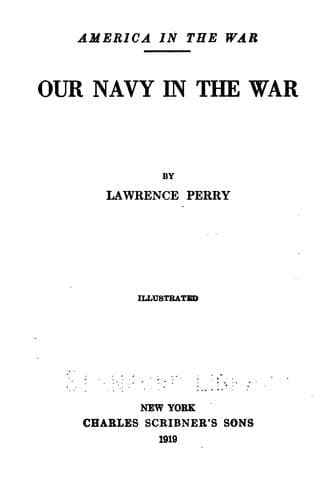
United States. Navy; World War, 1914-1918 -- Naval operations
In writing of aviation in the navy an incident which befell one of our
naval airmen in the English Channel seems to demand primary
consideration, not alone because of the dramatic nature of the event,
but because it sets forth clearly the nature of the work upon which our
flying men of the navy entered as soon as the United States took hostile
action against Germany. Our navy aviators, in fact, were the first force
of American fighters to land upon European soil after war was declared.
Here is the story as told by Ensign E. A. Stone, United States Naval
Reserve, after he was rescued from the Channel, where with a companion
he had clung for eighty hours without food and drink to the under-side
of a capsized seaplane pontoon. "I left our station in a British
seaplane as pilot, with Sublieutenant Moore of the Royal Naval Air
Service as observer, at 9 o'clock in the morning. Our duty was to convoy
patrols. When two hours out, having met our ships coming from the
westward, we thought we sighted a periscope ahead, and turned off in
pursuit. We lost our course. Our engine dropped dead, and at 11.30
o'clock forced us to land on the surface of a rough sea. We had no kite
nor radio to call for assistance, so we released our two
carrier-pigeons. We tied a message with our position and the word
'Sinking' on each. The first, the blue-barred one, flew straight off and
reached home. But the other, which was white-checked, lit on our machine
and would not budge until Moore threw our navigation clock at him, which
probably upset him so that he failed us.
"Heavy seas smashed our tail-planes, which kept settling. I saw that
they were pulling the machine down by the rear, turning her over. We
tore the tail-fabric to lessen the impact of the waves. It wasn't any
use. The tail-flat was smashed and its box filled with water.
"This increased the downward leverage and raised her perpendicularly in
the air. At 2.30 P.M. we capsized. We climbed up the nose and 'over the
top' to the under-side of the pontoons. Our emergency ration had been in
the observer's seat at the back, but we had been so busy trying to
repair the motor and save ourselves from turning over that we didn't
remember this until too late. When I crawled aft for food Moore saw that
I was only helping the machine to capsize. He yelled to me to come back
and I did, just in time to save myself from being carried down with the
tail and drowned.
Public-domain text, read in full here on John Shaqi.
Reviews
Reviews
No reviews yet
Be the first to share your thoughts on this work.
Elsewhere in the archive
Join the Discussion
Join the discussion
Sign in to leave a comment or review.
Sign InorCreate an account