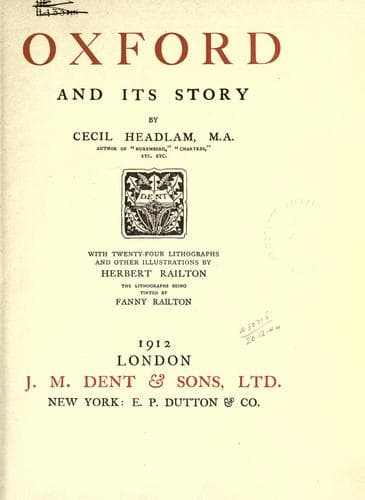
Oxford (England) -- History; University of Oxford -- History
In 1273, for instance, we read of an encounter between the Northerners
and the Irish, which resulted in the death of several Irishmen. So
alarming, apparently, was this outbreak that many of the leading members
of the University departed in fear, and only returned at the stern
command of the King. The bishops, too, issued a notice, in which they
earnestly exhorted the clerks in their dioceses to "repair to the
schools, not armed for the fight, but rather prepared for study." But
the episcopal exhortation had about as much effect as a meeting of the
Peace League in Exeter Hall would have now. Quarrel after quarrel broke
out between the rival nations. They plundered each others' goods and
broke each others' heads with a zest worthy of an Irish wake.
In spite of their reputation for riotousness, however, the Irish
students were specially exempted by royal writ from the operation of the
statute passed by Parliament in 1413, which ordered that all Irishmen
and Irish clerks, beggars called Chamberdekens, should quit the realm.
Graduates in the schools had been exempted in the statute. This
exemption does not appear to have conduced to the state of law and order
painfully toiled after by the mere Saxon. For a few years later, in the
first Parliament of Henry VI., the Commons sent up a petition
complaining of the numerous outrages committed near Oxford by "Wylde
Irishmen." These turbulent persons, it was alleged, living under the
jurisdiction of the Chancellor, set the King's officers at defiance, and
used such threatening language, that the bailiffs of the town did not
dare to stir out of their houses for fear of death. The Commons
therefore prayed that all Irishmen, except graduates in the schools,
beneficed clergy, professed monks, landowners, merchants and members of
civic corporations, should be compelled to quit the realm. It was also
demanded that graduates of Irish extraction should be required to find
security for their good behaviour, and that they should not be allowed
to act as principals of halls. This petition received the royal assent.
But it was stipulated that Irish clerks might freely resort to Oxford
and Cambridge, if they could show that they were subjects of the English
king.
It was in vain that students were compelled to swear that they would not
carry arms; in vain were seditious gatherings and leagues for the
espousal of private quarrels forbidden.
Public-domain text, read in full here on John Shaqi.
Reviews
Reviews
No reviews yet
Be the first to share your thoughts on this work.
Elsewhere in the archive
Join the Discussion
Join the discussion
Sign in to leave a comment or review.
Sign InorCreate an account