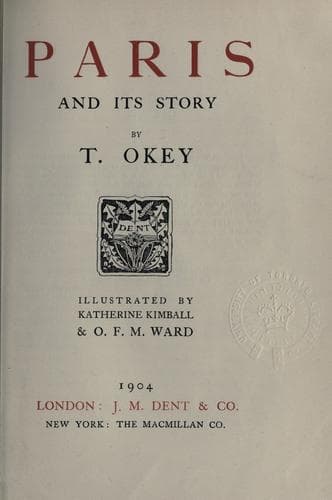
Paris (France) -- Description and travel; Paris (France) -- History
of Sully, probably the greatest financial genius France has ever known,
by wise and firm statesmanship lifted the country from bankruptcy to
prosperity and contentment.
[Illustration: HÔTEL DE SULLY.]
Henry, like one of his predecessors, had of _bastards et bastardes une
moult belle compagnie_, but as yet no legitimate heir. A divorce from
Marguerite of Valois and a politic marriage with the pope's niece, Marie
de' Medici,[120] gave him a magnificent dowry, an additional bond to
the papacy, and several children.
Henri Quatre, hero of Voltaire's famous epic, is the most popular and
romantic figure in the gallery of French kings. His statue on the Pont
Neuf was spared for a while by the revolutionists, who made every
passer-by in a carriage alight and bow to it. Born among the mountains,
Henry was patient of fatigue and hardships. In good or evil fortune his
gaiety of heart never failed him. Brave and generous, courteous and
witty, he endeared himself to all his subjects, save a few fanatics, and
won a desperate cause by sheer personal magic and capacity. Like all his
race, Henry was susceptible to the charms of the daughters of Eve, but,
unlike his descendants, he never sacrificed France to their tears and
wiles. When the question of the succession was urgent he thought of
marrying Gabrielle d'Estrées, whom he had created Duchess of Beaufort.
But Sully opposed the union, and the impatient Gabrielle sought her
royal lover, and used all her powers of fascination to compass the
dismissal of the great minister. Henry, however, stood firm, and
Gabrielle burst into passionate reproaches. It was of no avail. "Let me
tell you," answered Henry, calmly, "if I must choose between you and the
duke, I would sooner part with ten mistresses such as you than one
faithful servant such as he."
In 1610 the king was making great preparations for a war with Austria,
and, on the 14th May, desiring to consult Sully, who was unwell in his
rooms at the Arsenal, he determined to spare him the fatigue of
travelling to the Louvre, and to drive to the Arsenal.
Public-domain text, read in full here on John Shaqi.
Reviews
Reviews
No reviews yet
Be the first to share your thoughts on this work.
Elsewhere in the archive
Join the Discussion
Join the discussion
Sign in to leave a comment or review.
Sign InorCreate an account