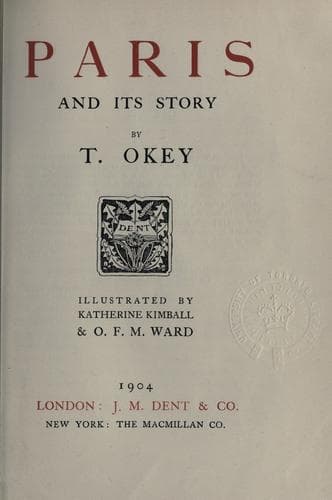
Paris (France) -- Description and travel; Paris (France) -- History
and Modena, 35,000,000 from the Papal States, an equally large sum from
Tuscany; one hundred finest horses of Lombardy to the five Directors,
"to replace the sorry nags that now draw your carriages"; convoys of
priceless manuscripts and sculpture and pictures to adorn the galleries
of Paris. So persistent were these raids on the collections of art in
Italy that Napoleon is known there to this day as _il gran ladrone_. The
chief duty of the new French officials in Italy, said Lucien Bonaparte,
is to supervise the packing of pictures and statues for Paris. No less
than 5233 of these works of art were confiscated by the Allies in 1815,
and returned to their former owners.
In less than a decade the rusty old stage properties and the baubles of
monarchy were furbished anew, sacred oil from the little phial of Rheims
anointed the brow of a new dynast, and a Roman Pontiff blessed the crown
with which a once poor, pensioned, disaffected Corsican patriot crowned
himself lord of France in Notre Dame. The old pomposities of a court
came strutting back to their places:--Arch Chancellors, Grand Electors,
Constables, Grand Almoners, Grand Chamberlains, Grand Marshals of the
Palace, Masters of the Horse, Masters of the Hounds, Madame Mère and a
bevy of Imperial Highnesses with their ladies-in-waiting. Only one thing
was wanting, as a Jacobin bitterly remarked--the million of men who were
slain to end all that mummery. The fascinating story of how this amazing
transformation was effected cannot be told here. The magician who
wrought it was possessed of a soaring, visionary imagination, of a
mental instrument of incomparable force and efficiency, of an iron will,
a prodigious intellectual activity, and a piercing insight into the
conditions of material success, rarely, if ever before, united in the
same degree in one man. Napoleon Bonaparte was of ancient, patrician
Florentine blood, and perchance the descendant of one of those of
Fiesole--
"In cui riviva la sementa santa
Di quei Romani che vi rimaser quando
Fu fatto il nido di malizia tanta."[164]
He cherished a particular affection for Italy, and, so far as his
personal aims allowed, treated her generously. His descent into Lombardy
awakened the slumbering sense of Italian nationality. In more senses
than one, says Mr Bolton King, the historian of Italian unity, Napoleon
was the founder of modern Italy.
Public-domain text, read in full here on John Shaqi.
Reviews
Reviews
No reviews yet
Be the first to share your thoughts on this work.
Elsewhere in the archive
Join the Discussion
Join the discussion
Sign in to leave a comment or review.
Sign InorCreate an account