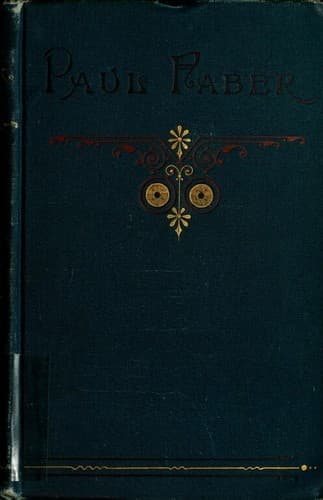
Christian fiction; Medical fiction; Scotland -- Fiction; Surgeons -- Fiction; Wingfold, Thomas (Fictitious character) -- Fiction
It took but one interview after he had confessed it to himself, to
reveal the fact to her that she had grown a burden to him. He came a
little seldomer, and by degrees which seemed to her terribly rapid, more
and more seldom. He had never recognized duty in his relation to her. I
do not mean that he had not done the effects of duty toward her; love
had as yet prevented the necessity of appeal to the stern daughter of
God. But what love with which our humanity is acquainted can keep
healthy without calling in the aid of Duty? Perfect Love is the mother
of all duties and all virtues, and needs not be admonished of her
children; but not until Love is perfected, may she, casting out Fear,
forget also Duty. And hence are the conditions of such a relation
altogether incongruous. For the moment the man, not yet debased, admits
a thought of duty, he is aware that far more is demanded of him than,
even for the sake of purest right, he has either the courage or the
conscience to yield. But even now Faber had not the most distant
intention of forsaking her; only why should he let her burden him, and
make his life miserable? There were other pleasures besides the company
of the most childishly devoted of women: why should he not take them?
Why should he give all his leisure to one who gave more than the half of
it to her baby?
He had money of his own, and, never extravagant upon himself, was more
liberal to the poor girl than ever she desired. But there was nothing
mercenary in her. She was far more incapable of turpitude than he, for
she was of a higher nature, and loved much where he loved only a little.
She was nobler, sweetly prouder than he. She had sacrificed all to him
for love--could accept nothing from him without the love which alone is
the soul of any gift, alone makes it rich. She would not, could not see
him unhappy. In her fine generosity, struggling to be strong, she said
to herself, that, after all, she would leave him richer than she was
before--richer than he was now. He would not want the child he had given
her; she would, and she could, live for her, upon the memory of two
years of such love as, comforting herself in sad womanly pride, she
flattered herself woman had seldom enjoyed. She would not throw the past
from her because the weather of time had changed; she would not mar
every fair memory with the inky sponge of her present loss. She would
turn her back upon her sun ere he set quite, and carry with her into the
darkness the last gorgeous glow of his departure. While she had his
child, should she never see him again, there remained a bond between
them--a bond that could never be broken. He and she met in that child's
life--her being was the eternal fact of their unity.
Public-domain text, read in full here on John Shaqi.
Reviews
Reviews
No reviews yet
Be the first to share your thoughts on this work.
Elsewhere in the archive
Join the Discussion
Join the discussion
Sign in to leave a comment or review.
Sign InorCreate an account