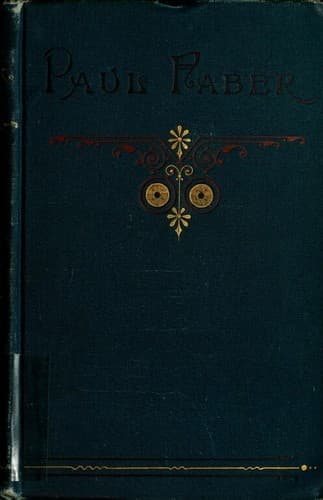
Christian fiction; Medical fiction; Scotland -- Fiction; Surgeons -- Fiction; Wingfold, Thomas (Fictitious character) -- Fiction
To the minister he replied that he had been learning a good deal of
late, and among other things that the casting away of superstition did
not necessarily do much for the development of the moral nature; in
consequence of which discovery, he did not feel bound as before to
propagate the negative portions of his creed. If its denials were true,
he no longer believed them powerful for good; and merely as facts he did
not see that a man was required to disseminate them. Even here, however,
his opinion must go for little, seeing he had ceased to care much for
any thing, true or false. Life was no longer of any value to him, except
indeed he could be of service to Amanda. Mr. Drake might be assured she
was the last person on whom he would wish to bring to bear any of the
opinions so objectionable in his eyes. He would make him the most
comprehensive promise to that effect. Would Mr. Drake allow him to say
one thing more?--He was heartily ashamed of his past history; and if
there was one thing to make him wish there were a God--of which he saw
no chance--it was that he might beg of Him the power to make up for the
wrongs he had done, even if it should require an eternity of atonement.
Until he could hope for that, he must sincerely hold that his was the
better belief, as well as the likelier--namely, that the wronger and the
wronged went into darkness, friendly with oblivion, joy and sorrow alike
forgotten, there to bid adieu both to reproach and self-contempt. For
himself he had no desire after prolonged existence. Why should he desire
to live a day, not to say forever--worth nothing to himself, or to any
one? If there were a God, he would rather entreat Him, and that he would
do humbly enough, to unmake him again. Certainly, if there were a God,
He had not done over well by His creatures, making them so ignorant and
feeble that they could not fail to fall. Would Mr. Drake have made his
Amanda so?
When Wingfold read the letter of which I have thus given the
substance--it was not until a long time after, in Polwarth's room--he
folded it softly together and said:
"When he wrote that letter, Paul Faber was already becoming not merely a
man to love, but a man to revere." After a pause he added, "But what a
world it would be, filled with contented men, all capable of doing the
things for which they would despise themselves."
Public-domain text, read in full here on John Shaqi.
Reviews
Reviews
No reviews yet
Be the first to share your thoughts on this work.
Elsewhere in the archive
Join the Discussion
Join the discussion
Sign in to leave a comment or review.
Sign InorCreate an account